
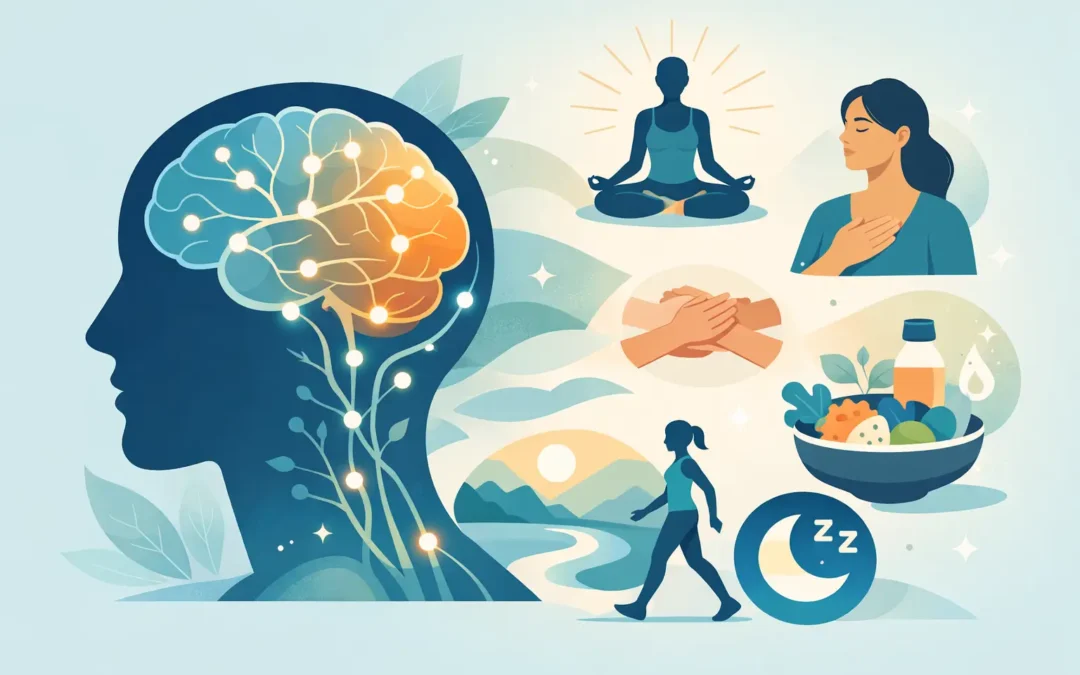
Your body may be asking for help long before you have words for what is wrong. A racing heart before a simple phone call, a tight chest during conflict, numbness after a hard day, or exhaustion that sleep does not fix can all be signs of a nervous system carrying too much for too long. Learning to regulate nervous system naturally is not about forcing yourself to “calm down.” It is about giving your body repeated experiences of safety, support, and release.
When stress, grief, trauma, anxiety, depression, or relationship pain has been present for a while, your nervous system can become stuck in high alert, shutdown, or a cycle between the two. That response is not a personal failure. It is your body trying to protect you. Gentle, consistent practices can help you build a different relationship with stress and create more room for peace, connection, and choice.
What nervous system regulation really means
Your autonomic nervous system works in the background, constantly scanning for signals of danger or safety. When it senses threat, whether the threat is immediate or tied to old emotional wounds, it may move you into fight, flight, freeze, or shutdown. You might feel restless, irritable, panicked, disconnected, foggy, or unable to make a decision.
Regulation does not mean you will never feel anxious, angry, sad, or overwhelmed again. Those emotions are part of being human. Regulation means you can notice what is happening, respond with care, and return to a steadier state without remaining trapped in survival mode for hours or days.
Natural strategies can make a meaningful difference, especially when they become part of everyday life. Still, self-care is not a substitute for professional support when symptoms are severe, trauma is involved, or you are struggling to function. The goal is not to do more on your own. The goal is to have more tools and the right support for your healing.
1. Start with a slower exhale
Breathing is one of the fastest ways to send your body a signal that the immediate danger may have passed. You do not need a complicated technique. Try inhaling comfortably through your nose, then letting your exhale last slightly longer than your inhale. For example, breathe in for a count of four and out for a count of six, without straining.
A longer exhale supports the calming branch of the nervous system. Practice for one or two minutes while sitting in your car, before a difficult conversation, or when you first notice your thoughts speeding up. If focusing on your breath makes you feel more anxious or dizzy, stop. Grounding through movement or your senses may feel safer instead.
2. Orient to the room you are in
When your body is activated, your attention often narrows around what feels threatening. Orientation helps gently widen your focus and remind your nervous system that you are here, in the present, not back in a painful moment from the past.
Slowly look around the room. Notice three colors, the shape of a window, light on the wall, or an object that feels comforting or familiar. Feel the support of the chair beneath you and the floor under your feet. You are not trying to convince yourself that everything is perfect. You are giving your body accurate information: in this moment, I am in this space, and I can look for what is steady.
This practice can be especially helpful after a tense meeting, a conflict with a partner, or a stressful drive through Asheville traffic. It takes less than a minute, yet it interrupts the momentum of panic and brings you back to your own body.
3. Use movement to complete the stress response
Stress creates energy in the body. Sometimes sitting still and trying to think your way out of distress only makes that energy feel louder. Gentle movement gives your nervous system a healthy outlet.
A walk outside, stretching your shoulders and hips, shaking out your hands, climbing stairs, or putting on one song and moving freely can all help. The best choice depends on your current state. If you feel wired and agitated, rhythmic walking or slow stretching may settle you. If you feel frozen, numb, or shut down, a brisk walk, a few squats, or shaking your arms can help you reconnect with energy and sensation.
Try not to turn movement into another demand on yourself. You do not need an intense workout to earn calm. Even five minutes of intentional movement can shift how your body feels.
4. Build small moments of sensory comfort
Your nervous system responds to your environment. Harsh noise, constant notifications, rushing, and clutter can keep your body on edge, while familiar, pleasant sensory experiences can help it settle.
Consider what genuinely feels soothing to you: warm tea, a weighted blanket, a hot shower, soft music, the scent of lotion, sunlight on your face, or time with a pet. These are not trivial comforts. They are signals that can support safety and presence.
It helps to prepare for stressful times before they arrive. Keep a calming playlist ready. Place a comforting object where you can see it. Create a brief transition ritual when you get home from work, such as changing clothes, stepping outside for fresh air, and sitting quietly for three minutes. Repeated rituals teach your body that it does not have to stay on guard all day.
5. Put words to what your body is carrying
Naming your experience can reduce its intensity. Rather than saying, “I am a mess,” try a more compassionate and specific description: “My chest is tight, my thoughts are racing, and I think I am overwhelmed.” This creates a little space between you and the feeling.
Journaling can help, but it does not need to be pages long. Write a few sentences about what happened, what you felt in your body, what emotion may be underneath, and what you need next. You may discover that anger is protecting hurt, or that constant busyness is covering exhaustion.
For some people, detailed journaling about trauma can feel activating. If that is true for you, keep your focus in the present. Write about what is helping right now, what you can see around you, or one kind action you can take for yourself today.
6. Let safe connection do its work
Human beings regulate through connection. A supportive conversation, a shared laugh, a hand held by someone you trust, or simply sitting near a calm person can remind your nervous system that you are not alone.
This does not mean you need to explain everything to everyone. Choose people who listen without minimizing your experience or rushing to fix it. You might say, “I have had a hard day. Could you just sit with me for a few minutes?” Clear, small requests make connection more accessible.
If relationship conflict is one of your biggest triggers, this may feel complicated. In those moments, taking a brief pause before continuing the conversation can protect both people. Regulation is not avoidance. It is creating enough steadiness to communicate without letting survival responses take over.
7. Support your baseline, not just the crisis
Nervous system care is most effective when it is woven into ordinary life. Sleep, regular meals, hydration, time outdoors, and limits around alcohol, caffeine, and endless scrolling all affect your capacity to handle stress. You do not need a perfect routine. One realistic change, practiced consistently, matters more than an ambitious plan that disappears after three days.
Notice patterns with curiosity. Does too much caffeine make your anxiety worse? Do you feel more emotionally raw after skipping meals? Does being on your phone late at night keep your mind alert? This is useful information, not evidence that you are doing life wrong. Your body is giving you feedback about what helps it feel more resourced.
When natural practices are not enough
If you are having frequent panic, intrusive memories, persistent numbness, severe depression, escalating conflict, or trouble getting through everyday responsibilities, deeper support can be an important next step. Trauma and chronic stress can shape the nervous system in ways that are difficult to shift through willpower alone.
Counseling can offer a safe place to understand the patterns beneath your symptoms and practice new responses at a pace that honors your story. Approaches such as EMDR, trauma-informed therapy, and neurofeedback may also support people whose bodies remain stuck in high alert despite their best efforts. At Jump Start Counseling and Neurofeedback, care can be tailored to both the emotional and physical experience of distress, because healing is not just something you think about. It is something you learn to feel.
You do not have to wait for a breakdown to begin caring for your nervous system. Choose one practice that feels possible today, repeat it with patience, and let that small act become proof that your body deserves support. A new beginning can start with one slower breath, one honest moment, and one decision to meet yourself with compassion.
