
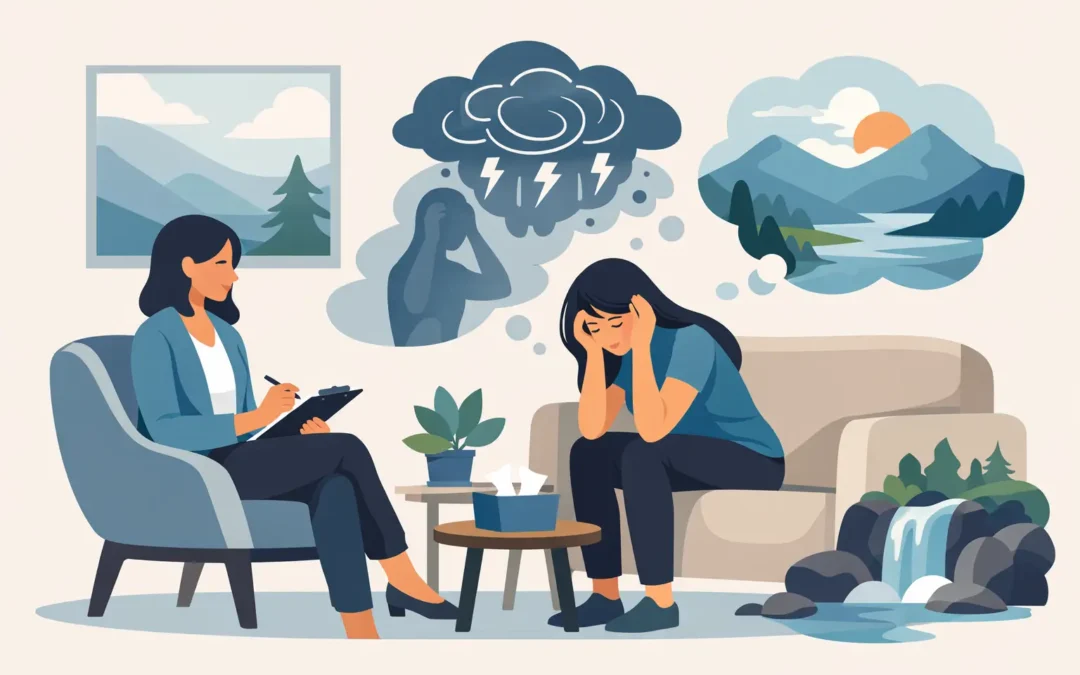
A panic attack can make an ordinary moment feel terrifying. You may be driving on I-240, standing in a grocery line, trying to fall asleep, or sitting safely at home when your heart races, your chest tightens, and your mind insists that something is terribly wrong. Panic attack therapy Asheville adults can turn to is not about telling you to simply calm down. It is about helping you understand what is happening, feel safer in your body, and regain confidence in your life.
Panic often leaves people with a second layer of fear: fear of the next attack. You may begin avoiding restaurants, crowded places, exercise, travel, meetings, or even being alone. The goal of therapy is bigger than getting through one difficult moment. It is to help you break the cycle so anxiety is no longer making your decisions for you.
What a Panic Attack Can Feel Like
Panic attacks can be intensely physical. Some people experience a pounding heartbeat, shortness of breath, shaking, nausea, dizziness, sweating, tingling, or a feeling of unreality. Others fear they are having a heart attack, losing control, fainting, or going crazy. The experience is real, even when it comes without an obvious external danger.
For some, panic arrives after a season of relentless stress, grief, trauma, conflict, or emotional exhaustion. For others, it seems to appear out of nowhere. Either way, the nervous system may be reacting as if it must protect you immediately. That does not mean you are weak or broken. It means your system has become overloaded or stuck in high alert.
Because several medical conditions can resemble panic symptoms, new, severe, or concerning chest pain, breathing trouble, fainting, or other urgent symptoms deserve prompt medical attention. Once medical concerns have been evaluated, therapy can help address the emotional and nervous-system patterns that keep panic going.
How Panic Attack Therapy in Asheville Supports Change
Effective panic treatment starts with a relationship where you do not have to minimize what you are feeling. A counselor can help you put words to the experience, identify patterns around attacks, and create a plan that fits your pace and needs. You do not have to share every detail at once. Healing works best when you feel respected, supported, and actively involved.
Therapy often includes learning how panic functions. A frightening body sensation can trigger a catastrophic thought: “I cannot breathe,” “I am going to pass out,” or “This will never stop.” That thought increases fear, which intensifies the physical sensations. Understanding this loop does not erase panic overnight, but it gives you a place to intervene.
You may practice grounding skills that bring your attention back to the present, as well as breathing approaches that do not force or fight your body. The right strategy depends on the person. For some people, slow exhalations and orienting to the room are helpful. For others, focusing too heavily on breathing can increase anxiety at first. Therapy gives you room to test what genuinely helps rather than relying on one-size-fits-all advice.
A counselor may also help you gradually face situations you have started avoiding. This is done thoughtfully, not by pushing you into overwhelming experiences. If driving, stores, social settings, or being far from home have become frightening, small planned steps can teach your brain that discomfort is survivable and that you are capable of moving through it.
Looking Beneath the Immediate Symptoms
Panic can be its own challenge, but it can also be connected to deeper experiences. Unresolved trauma, chronic people-pleasing, perfectionism, relationship stress, loss, and years of carrying too much can all leave the body with little room to recover. Talking through these experiences can be an essential part of treatment.
Trauma-informed approaches, including EMDR when appropriate, may help people process experiences that continue to activate fear long after the danger has passed. This work is never about forcing yourself to relive pain. It is about creating enough safety and support to help your mind and body recognize that the past does not have to keep controlling the present.
An Integrative Approach to Panic Relief
Some people benefit from traditional counseling alone. Others want support that also addresses how stress and panic are showing up in the body. An integrative approach can make room for both.
At Jump Start Counseling and Neurofeedback, therapy can be paired with brain-based supportive services such as LENS neurofeedback when it fits a client’s goals and clinical needs. Neurofeedback is not a replacement for counseling, medical care, or your own active participation in healing. For some people, however, it can be a useful complement to emotional processing and practical coping work, especially when the nervous system feels persistently overactivated.
Complementary options may also be meaningful for clients who feel disconnected from their bodies or who need gentler ways to settle and reconnect. What matters is not chasing a quick fix. It is building a personalized plan that respects your history, your preferences, and the kind of life you want to return to.
What Progress Actually Looks Like
Recovery from panic is rarely measured by never feeling anxious again. Anxiety is a normal human response, and your goal is not to become numb or perfectly in control. Progress often looks more like noticing a racing heart without immediately assuming catastrophe. It looks like attending the event you wanted to skip, driving a little farther, sleeping with less dread, or recovering more quickly after a stressful day.
There may be weeks when symptoms flare during a major life change, illness, loss, or relationship challenge. That does not mean treatment has failed. It can be an opportunity to use the tools you have built and to understand what your system needs now. Lasting change is often less dramatic than a sudden cure, but it is powerful: more choice, more steadiness, and less fear running the show.
Preparing for Your First Appointment
You do not need to arrive with the perfect explanation. It can help to notice when your panic began, what symptoms show up, what you tend to fear during an attack, and what you have started avoiding. If you take medications, have medical concerns, or have previously tried therapy, sharing that context can help shape your care.
It is also okay to be unsure about what you need. A first appointment is a place to ask questions, describe what has been happening, and see whether the therapeutic relationship feels like a good fit. The right support should feel compassionate and honest, while also giving you a clear path forward.
You Do Not Have to Organize Your Life Around Fear
Panic has a way of making your world smaller. It may convince you that safety only exists at home, near a trusted person, or when every possible risk is controlled. But your life can expand again. With skilled support, practical tools, and space to address the experiences beneath the alarm, you can begin to trust yourself and your body more fully.
If panic attacks are interrupting your work, relationships, rest, or ability to enjoy Asheville and the people you love, reaching out for help can be a courageous next step. A new beginning does not require you to feel fearless first. It begins when you decide that fear deserves support, not the final word.
