
Anxiety can make even ordinary life feel like too much. You may be getting through work, caring for everyone else, and trying to sleep, yet your body stays on alert and your thoughts keep racing. If you are searching for a LENS neurofeedback review anxiety information can feel both hopeful and confusing. Can a brain-based service really help when you already know why you are anxious, but still cannot seem to calm down?
LENS neurofeedback may be a supportive option for some people, particularly when anxiety is paired with mental fog, chronic stress, trauma-related activation, poor sleep, or the feeling that your nervous system never gets to stand down. It is not a magic fix, and it is not a replacement for thoughtful mental health care. But for the right person, it can become one meaningful part of a larger path toward more peace, choice, and freedom.
What LENS Neurofeedback Is
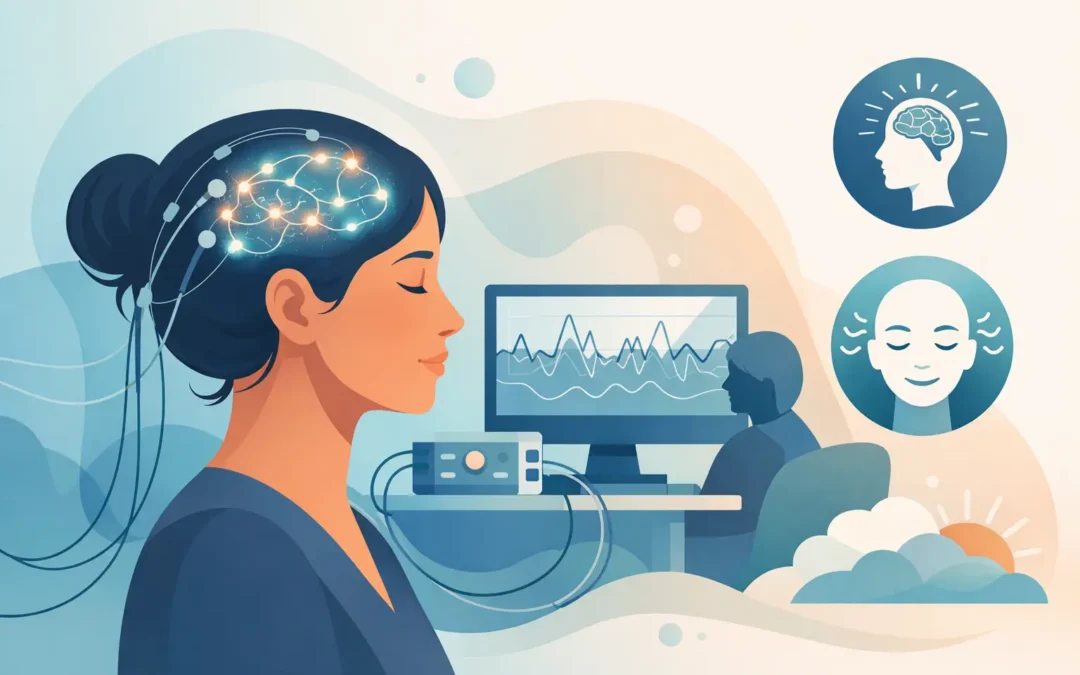
LENS stands for Low Energy Neurofeedback System. Unlike traditional neurofeedback, which often asks you to watch a screen or play a game while your brain receives feedback, LENS sessions are usually quiet and brief. Small sensors are placed on the scalp to read brainwave activity. The system then provides a very subtle feedback signal designed to help the brain recognize and shift patterns that may be stuck.
You do not have to concentrate, perform, or force yourself into a relaxed state. That can be a relief for people with anxiety, especially those who are tired of feeling as though every healing tool becomes another task to do perfectly.
The underlying idea is not that anxiety is a personal failure or that your brain is broken. Anxiety can be a learned protective response. After prolonged stress, trauma, grief, medical challenges, or years of carrying too much, the brain and body may become highly practiced at scanning for danger. Neurofeedback is intended to support greater flexibility in that response.
A LENS Neurofeedback Review for Anxiety: What Is Realistic?
The most honest review is that results vary. Some clients notice small changes early, such as sleeping more deeply, feeling less reactive in traffic, or having a little more space between an anxious thought and their response to it. Others need several sessions before they can tell whether anything is shifting. A few may decide it is not the right fit for their system or their goals.
Improvement also may not arrive as a dramatic feeling of calm. Sometimes it looks like sending the email you had avoided, recovering faster after a difficult conversation, or being able to sit through a quiet evening without your mind turning every sensation into a warning. These changes matter because they restore participation in your own life.
LENS neurofeedback is best viewed as supportive care, not a guarantee or a cure for an anxiety disorder. Research on neurofeedback is still developing, and outcomes can depend on the individual, the provider’s training, the type and severity of symptoms, and whether neurofeedback is combined with other forms of care. A responsible provider will make room for your questions, track your response, and adjust the plan rather than promising a specific result.
What a Session May Feel Like
Your first appointment should begin with a conversation about what you are experiencing. Anxiety is not one-size-fits-all. It may show up as panic, constant worry, muscle tension, irritability, avoidance, intrusive thoughts, exhaustion, or a sense of disconnection from yourself and other people. Your history, current stressors, sleep, medications, medical concerns, and goals all help shape an appropriate plan.
During the neurofeedback portion, sensors are placed on specific areas of the scalp. They read activity; they do not put electricity into your brain. The feedback itself is extremely brief. Many people simply rest during the session. You may feel nothing unusual at all, or you may notice subtle sensations such as tiredness, calm, alertness, or emotional release afterward.
Because the work can be subtle, it helps to pay attention to the days between appointments. Notice your sleep, energy, mood, stress tolerance, concentration, dreams, and physical tension. You are not looking for perfection. You are looking for patterns that help you and your provider understand what is changing.
When Anxiety Is Connected to Trauma or Overwhelm
For many people, anxiety is not just worry. It is a nervous system response shaped by experiences that were frightening, painful, unpredictable, or simply too much to process alone. You may understand your past intellectually and still feel your chest tighten when you are criticized, your phone rings late at night, or someone you love pulls away.
In these situations, LENS neurofeedback may be most helpful when it is paired with therapy that respects both the story and the body. Counseling can help you make meaning, build boundaries, process grief, improve relationships, and practice new ways of responding. Trauma-focused approaches such as EMDR may also be appropriate for some clients. Neurofeedback can support regulation, while therapy helps you use that greater stability to create lasting change.
This integrated approach matters because symptom relief is only part of healing. The deeper goal is to feel more present in your relationships, more connected to your values, and more capable of meeting life without abandoning yourself.
Who May Want to Consider LENS?
LENS neurofeedback may be worth discussing if you feel chronically keyed up, mentally overloaded, emotionally reactive, or worn down by anxiety that has not fully responded to coping strategies alone. It can also appeal to people who want a noninvasive, low-effort complement to counseling.
It may be especially useful to ask about LENS if anxiety comes with trouble sleeping, difficulty concentrating, persistent fight-or-flight feelings, or a history of stress and trauma. Still, the right next step depends on your full picture. A thorough assessment may point toward counseling, medication evaluation, medical care, lifestyle changes, neurofeedback, or a combination.
If you have a history of seizures, significant neurological concerns, severe mood symptoms, or recent changes in psychiatric medication, share that information before beginning. Your provider should coordinate thoughtfully with other members of your care team when needed. And if anxiety includes thoughts of harming yourself or feeling unable to stay safe, seek immediate crisis support rather than waiting for a neurofeedback appointment.
Questions That Help You Choose Care
You deserve more than a sales pitch when you are feeling vulnerable. Ask a prospective provider how they assess whether LENS is appropriate, what training they have, how they monitor reactions, and what they recommend if symptoms increase or do not improve. Ask how neurofeedback fits with counseling and whether they can help you set clear, realistic goals.
It is also fair to ask practical questions about frequency, cost, scheduling, and how long they typically wait before reviewing progress. Anxiety often thrives on uncertainty. Knowing the plan can help you feel more grounded from the beginning.
At Jump Start Counseling and Neurofeedback in Asheville, care is approached as a partnership. You do not have to prove that you are struggling enough, and you do not have to choose between being understood and receiving practical support. Your experience matters, as does your capacity for change.
Give Your Nervous System a New Experience
Anxiety may have convinced you that relief is always temporary or that you have to push through alone. You do not. Whether LENS neurofeedback becomes part of your care or not, the most valuable next step is choosing support that sees the whole person behind the symptoms.
Healing can begin with a small shift: one quieter night, one honest conversation, one moment when you realize your body is no longer bracing for the worst. Those moments can grow. With compassionate guidance and a plan that fits your needs, a new beginning is possible.
