
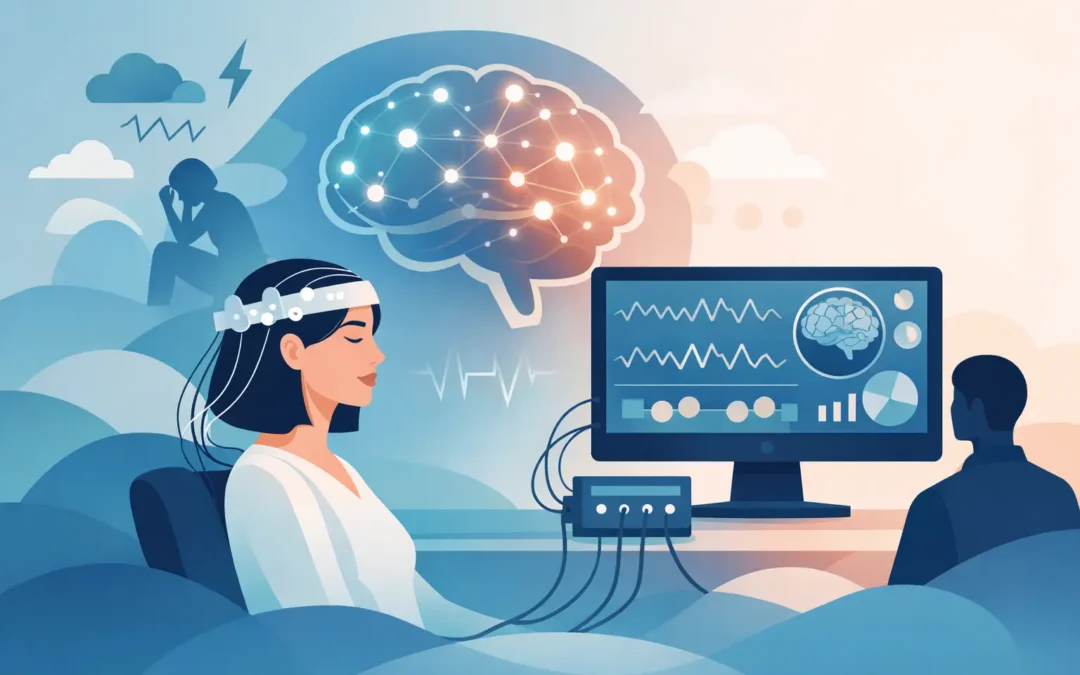
When anxiety keeps showing up in your body before your mind can even catch up, it can feel exhausting. Your chest tightens, your thoughts race, sleep gets lighter, and even small decisions start to feel bigger than they should. Neurofeedback for anxiety appeals to many people for one simple reason – it aims to help the brain and nervous system settle, not just talk about the stress after it takes over.
For some people, that feels like a missing piece. They have insight. They know why they are anxious. They may have read the books, tried the breathing apps, and talked themselves through every worst-case scenario. Yet their body still reacts as if danger is right around the corner. That is often where a brain-based approach becomes worth considering.
What is neurofeedback for anxiety?
Neurofeedback is a type of brain-based training that gives the nervous system information about its own activity so it can begin to regulate more efficiently. Think of it less as forcing the brain to behave and more as helping it recognize patterns that are keeping it stuck.
When anxiety is persistent, the brain can get caught in over-alert patterns. You may feel wired, hyperaware, restless, emotionally reactive, or unable to fully relax even when life is relatively safe. Neurofeedback for anxiety is designed to support better regulation, which can lead to feeling calmer, more present, and less driven by constant internal alarm.
At an integrative practice, this kind of work is often used alongside counseling rather than in place of it. That matters. Anxiety is not always just a brainwave issue. Sometimes it is tied to trauma, grief, relationship stress, burnout, or years of living in survival mode. The most helpful care respects both the story and the nervous system.
Why anxiety can be so hard to talk yourself out of
Anxiety is often described as overthinking, but many people experience it as a full-body event. Their mind may spin, yes, but so do their muscles, breathing, digestion, sleep, and energy. You can know you are safe and still feel unsafe.
That disconnect is frustrating. It can make you question yourself or wonder why insight is not enough. The truth is that anxiety often lives in learned patterns of activation. If your nervous system has spent months or years bracing, scanning, and preparing, it may not switch off just because you want it to.
This is one reason neurofeedback can be meaningful. It may help create change at the level where anxiety is being repeated, not just interpreted. For people who feel stuck in cycles of panic, chronic stress, hypervigilance, or emotional overload, that can be a hopeful shift.
What a session may feel like
Many people expect neurofeedback to feel intense or invasive. Usually, it is neither. Sensors are placed on the scalp to monitor brain activity, and the system responds in real time. With LENS neurofeedback, for example, the process is typically brief and gentle. The goal is not to strain or perform. It is to give the brain useful feedback and allow it to reorganize.
During and after sessions, experiences vary. Some people notice they feel calmer, clearer, or less reactive. Others notice subtler changes first, such as sleeping more deeply, feeling less edgy in social situations, or recovering more quickly after stress. Sometimes improvement is gradual. Sometimes it shows up in daily life before a person can fully explain it.
That said, neurofeedback is not magic, and it is not identical for everyone. The pace depends on the person, the severity of symptoms, coexisting trauma, overall stress load, and how long the nervous system has been dysregulated. Good care makes room for that individuality rather than promising instant results.
Who may benefit most from neurofeedback for anxiety
This approach can be especially appealing for adults who feel like they are doing everything they can and still do not feel settled. That may include people who live with chronic worry, panic symptoms, racing thoughts, insomnia, social anxiety, trauma-related activation, or a general sense of being on edge all the time.
It may also help people whose anxiety shows up as brain fog, irritability, emotional flooding, or shutdown after stress. Not everyone with anxiety looks visibly panicked. Some people are highly functional on the outside while carrying a nonstop hum of tension underneath. They get through work, family life, and responsibilities, but at a real internal cost.
Neurofeedback may be a good fit when you want support that goes beyond coping skills alone. It can be particularly useful if you are open to an integrative approach and want your treatment to reflect both your emotional experience and your nervous system patterns.
What neurofeedback can and cannot do
It helps to be clear and grounded here. Neurofeedback can support regulation, but it is not a cure-all. If anxiety is connected to unresolved trauma, painful relationship dynamics, grief, or major life transitions, those experiences still deserve compassionate attention.
That is why combining neurofeedback with therapy can be so powerful. As your nervous system becomes less reactive, you may have more capacity to process what you have been carrying. You may think more clearly, feel less overwhelmed in sessions, and have an easier time applying the tools you are learning. In other words, regulation can make deeper healing more accessible.
There are also practical trade-offs. Neurofeedback typically works best as a process rather than a one-time experience. It requires consistency, openness, and some patience. Some people notice clear benefits quickly, while others need more time to see patterns shift. If someone is hoping for immediate relief from every symptom, the experience may feel slower than expected.
Still, slower does not mean ineffective. Lasting change often comes from helping the brain do less fighting and more regulating over time.
Neurofeedback and therapy can work together
For many adults, anxiety is not happening in isolation. It touches relationships, confidence, work, sleep, and the ability to enjoy life. You may find yourself avoiding conflict, overpreparing for everything, shutting down emotionally, or staying so busy that you never have to feel what is underneath.
Therapy helps make sense of those patterns. It gives you language, support, and practical tools. Neurofeedback may complement that process by helping the nervous system become less stuck in overdrive.
That combination can be especially meaningful for trauma recovery. When the body no longer feels quite as braced, therapy may feel safer and more productive. You are not forcing insight into a system that is already overwhelmed. You are creating conditions for real breakthroughs.
At Jump Start Counseling and Neurofeedback, that whole-person perspective matters. Healing is not just about reducing symptoms. It is about helping you feel more grounded in yourself, more connected in your relationships, and more able to fully participate in your life.
How to know if it is worth exploring
If your anxiety feels bigger than logic, if your body stays activated even when your mind understands, or if traditional approaches have only gotten you part of the way there, it may be worth asking about neurofeedback.
You do not need to have the perfect explanation for why you feel the way you do. You also do not need to be in constant crisis for support to be appropriate. Sometimes the clearest sign is simply this: you are tired of living in survival mode, and you want a different way forward.
A thoughtful provider will help you sort through whether neurofeedback makes sense for your symptoms, history, and goals. They should also be honest about what it can help with, where therapy fits in, and what kind of process to expect. Good treatment is not about selling hope. It is about offering grounded hope with real support behind it.
Anxiety can make life feel smaller. It can narrow your choices, steal your rest, and convince you that this level of tension is just who you are. It is not. With the right support, your brain and body can learn a different pattern, and that change can open the door to a calmer, freer way of living.
