
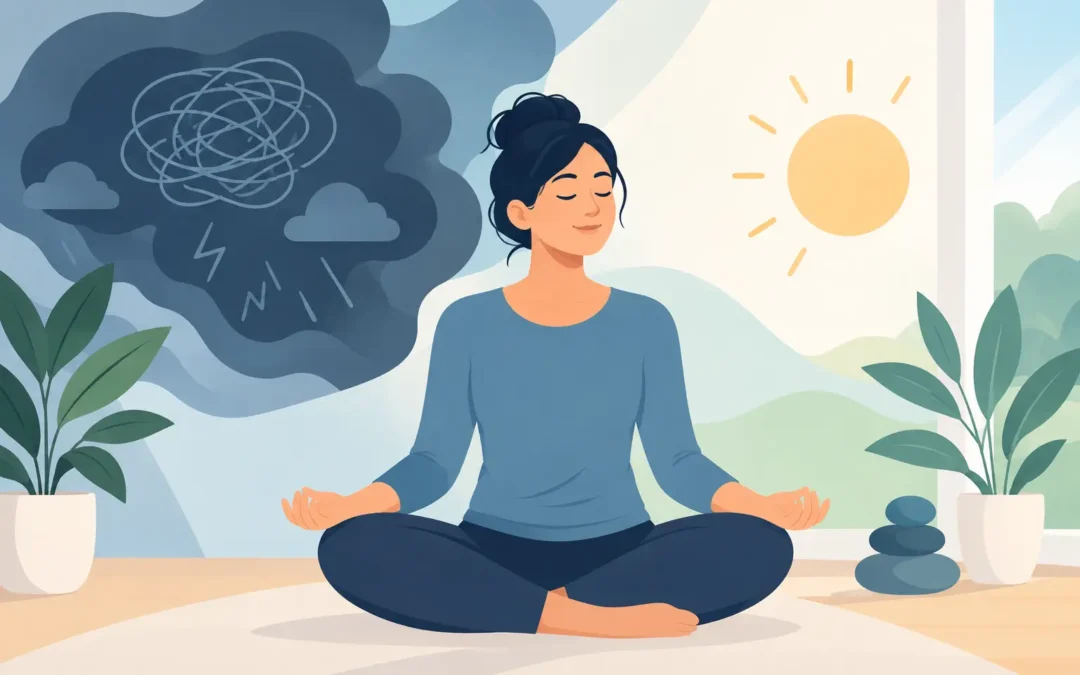
Some stress passes when the deadline is over, the conflict settles, or life becomes less demanding. Chronic stress is different. It stays in your body after the moment has passed, follows you into bed, shortens your patience, clouds your thinking, and makes even ordinary tasks feel heavier. If you are looking for help for chronic stress symptoms, that does not mean you are weak or failing. It may mean your mind and nervous system have been carrying too much for too long.
You may be functioning on the outside while feeling anything but functional inside. You answer emails, care for others, make meals, and show up to work, yet a part of you feels tense, exhausted, numb, or close to breaking. You deserve support that sees the full picture, not just one symptom at a time.
When Stress Stops Being Temporary
Stress is a normal human response to challenge. It can help you focus before a presentation, react quickly in an emergency, or meet a short-term demand. But when pressure becomes constant – because of trauma, grief, financial uncertainty, caregiving, relationship strain, a demanding job, or years of putting everyone else first – the body may struggle to return to a sense of safety.
Chronic stress can look different from person to person. For some, it is relentless worry, racing thoughts, or feeling on edge all day. For others, it shows up as headaches, jaw tension, stomach problems, disrupted sleep, fatigue, irritability, or frequent illness. You may feel emotionally flat, forgetful, disconnected from the people you love, or unable to enjoy things that once mattered.
These symptoms are not imagined. Emotional stress has a real physical impact. When your nervous system remains in high alert, it can become harder to rest, think clearly, regulate strong emotions, and respond calmly to everyday frustrations. This is why willpower alone often does not solve the problem.
Help for Chronic Stress Symptoms Begins With Listening
Many people try to manage long-term stress by pushing harder. They promise themselves they will sleep more next week, take a vacation someday, or feel better once one more problem is handled. Healthy routines can absolutely help, but they may not reach the underlying patterns that keep your system activated.
The first meaningful step is to get curious rather than critical. Instead of asking, “Why can’t I handle this?” try asking, “What has my body been trying to tell me?” That shift creates room for compassion and change.
A trained mental health professional can help you identify what is feeding the stress response. Sometimes the source is obvious, such as a painful loss or an overwhelming season at work. Sometimes it is more layered: unresolved trauma, childhood experiences, perfectionism, people-pleasing, a relationship dynamic, or the long habit of ignoring your own needs to survive.
Therapy offers a confidential place to slow down and make sense of what has been happening. It is not about being told to “calm down.” It is about learning practical ways to regulate your nervous system, process emotional pain, set healthier boundaries, and rebuild trust in yourself.
Why Your Body May Still Feel Unsafe
You can know intellectually that you are safe and still feel panic in your chest, tension in your shoulders, or a strong urge to withdraw. This disconnect can be frustrating, especially for people who have already read the books, tried meditation apps, or talked with supportive friends.
Your body learns from experience. When you have lived through ongoing stress or trauma, your brain may become quicker to scan for danger and slower to settle. A raised voice, a difficult email, a crowded store, or even quiet downtime can trigger a reaction that feels larger than the current moment.
This does not mean you are broken. It means your system adapted to protect you. Healing often involves helping the brain and body learn that the present is different from the past. Depending on your needs, that may include counseling, trauma-informed approaches such as EMDR, and brain-based support like LENS neurofeedback.
Neurofeedback is not a replacement for meaningful therapeutic work, and it is not the right fit for every person. For some clients, however, it can be a valuable complement to counseling by supporting the brain’s capacity for flexibility and regulation. An integrative approach gives you more than one path forward, because lasting stress rarely has only one cause.
Small Daily Practices That Support Recovery
Professional care can create powerful change, and your day-to-day choices matter too. The goal is not to build a perfect wellness routine. That can become another demand on an already overwhelmed life. Choose a few practices that help your body receive the message that rest and safety are allowed.
Start with the basics that are often hardest when you are stressed: regular meals, water, movement, and sleep. A ten-minute walk, a gentle stretch, or sitting outside without your phone can help interrupt the cycle of constant activation. If deep breathing makes you feel more anxious, do not force it. Some people feel better with movement, grounding through the senses, or simply placing both feet firmly on the floor.
Notice where your energy is going. Chronic stress often grows in spaces where boundaries are thin. You may not be able to change every demand immediately, but you may be able to pause before agreeing to another obligation, ask for help, limit contact with a draining person, or create a transition ritual between work and home.
It also helps to name what you are feeling with honesty. “I am stressed” can be a starting point, but there may be grief underneath it, fear about the future, anger that has had nowhere to go, or loneliness you have minimized. Emotions tend to become less overwhelming when they are acknowledged in a safe setting rather than pushed aside.
When It Is Time to Reach Out
Consider seeking support when stress is affecting your sleep, health, concentration, relationships, work, or ability to enjoy life. Reach out sooner if you feel increasingly isolated, hopeless, emotionally numb, prone to panic, or unable to turn off your thoughts. You do not need to wait for a complete breakdown to deserve care.
If stress symptoms come with chest pain, severe physical symptoms, or concerns about your medical health, contact a medical provider promptly. If you are in immediate danger or having thoughts of harming yourself, call or text 988 in the United States for the Suicide & Crisis Lifeline, call 911, or go to the nearest emergency room.
For ongoing stress, the right therapeutic relationship can be a turning point. You should feel respected, heard, and invited to move at a pace that is challenging enough to create change but gentle enough to feel manageable. Some people benefit most from focused individual therapy. Others need trauma recovery work, couples counseling to address relational stress, or teletherapy that makes consistent care easier to access.
At Jump Start Counseling and Neurofeedback, support is designed to honor both the emotional story and the physical impact of distress. The work is not about pretending life is easy. It is about helping you develop the tools, insight, and inner steadiness to meet life without losing yourself in it.
You have spent enough time surviving on adrenaline, avoidance, and sheer determination. A new beginning may start quietly: one honest conversation, one appointment, one decision to believe that feeling better is possible. Your stress response learned to protect you. With compassionate support, it can also learn to let you live more freely.
