
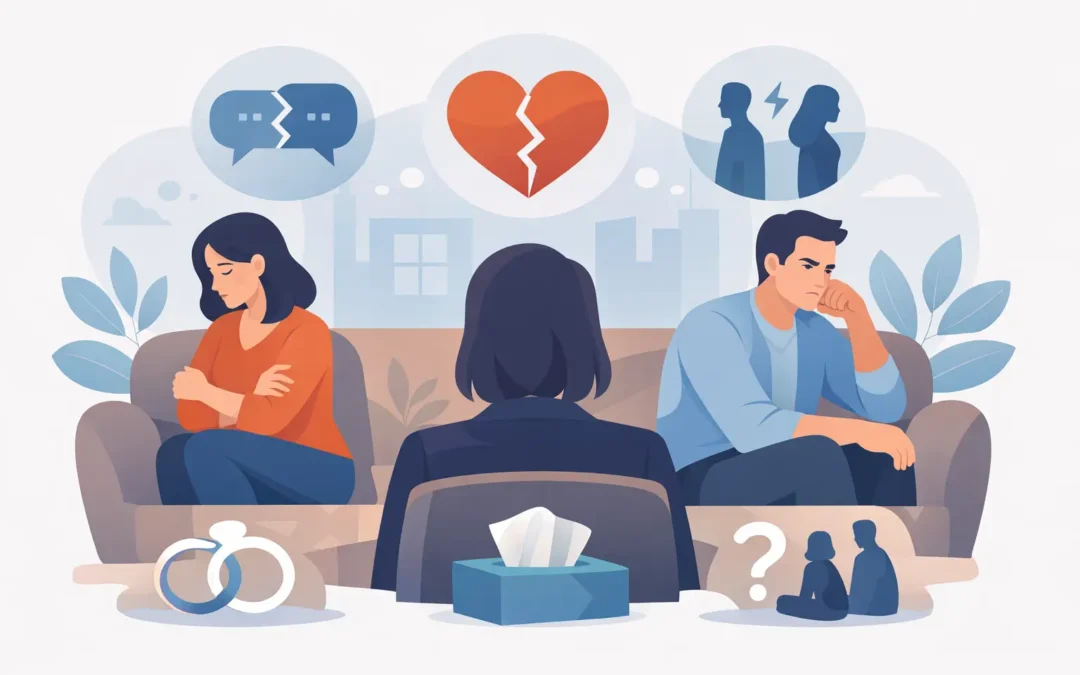
A relationship can look fine from the outside while feeling lonely, tense, or exhausting on the inside. If you are wondering when should couples seek counseling, the answer is often sooner than couples expect. You do not have to wait for a major betrayal, a separation conversation, or a complete breakdown in communication to ask for support.
Couples counseling is not proof that your relationship has failed. It can be a courageous decision to understand each other more clearly, interrupt painful patterns, and create a new way forward. When both people are willing to show up with honesty and care, even a relationship that feels stuck can begin to change.
When Should Couples Seek Counseling?
Many couples wait until they are in crisis because they assume therapy is only for relationships on the edge. But recurring distress is enough reason to reach out. If the same argument keeps returning without resolution, if one or both partners feel unheard, or if daily life has become more about managing tension than enjoying each other, counseling can help.
The right time is not determined by how dramatic your problems look compared with someone else’s. It is determined by the impact those problems are having on your sense of safety, connection, and hope. A couple may seek counseling after six months of escalating conflict, while another may come in after years of quiet distance. Both deserve support.
Counseling can also be valuable during a transition that is not necessarily negative. Becoming parents, blending families, caring for aging relatives, moving, changing careers, recovering from illness, or navigating grief can all place new pressure on a partnership. Loving each other does not automatically give you the tools to handle every change. Support can help you meet the transition as a team instead of becoming opponents.
Signs Your Relationship May Need Support
Some struggles are obvious, such as frequent yelling, name-calling, secrecy, or conversations that end with someone walking away. Other signs are much quieter. You may stop bringing up concerns because it feels pointless. You may feel more comfortable sharing your day with friends than with your partner. Physical intimacy may feel strained, avoided, or disconnected from emotional closeness.
Pay attention if resentment is building. Resentment often grows when one person feels they carry too much of the emotional labor, household responsibility, parenting load, or financial pressure. It can also grow when old hurts are brushed aside before they are truly repaired. What begins as irritation can turn into a hard protective shell if it is not addressed.
A loss of trust is another reason to seek help. Trust can be affected by infidelity, hidden spending, repeated broken promises, emotional affairs, substance use, or patterns of withholding the truth. Rebuilding it takes more than an apology or a promise to do better. It requires consistent action, space for the injured partner’s pain, and clearer agreements about what safety looks like going forward.
You may also benefit from counseling if conflict has become too predictable. Perhaps one of you pursues a conversation while the other shuts down. Maybe one person becomes critical and the other becomes defensive. Neither partner may want this cycle, yet both can feel trapped in it. A trained counselor can help you slow the pattern down, understand what is underneath it, and practice a more productive response.
You Do Not Need to Agree on Everything
One common misconception is that healthy couples rarely disagree. In reality, differences around money, sex, parenting, family boundaries, faith, politics, household expectations, and time together are normal. The question is whether you can approach those differences with respect.
Counseling may be helpful when disagreements regularly become personal attacks, contempt, stonewalling, or prolonged silence. It can also help when you have reached an impasse on a major decision and cannot find a way to talk without reopening old wounds. The goal is not to make two people identical. It is to help each person feel heard, respected, and able to work toward solutions that honor the relationship.
Sometimes the issue is less about the topic and more about what the topic represents. An argument about dishes may actually be about feeling unsupported. A disagreement about spending may be connected to fear about security or control. When couples learn to name the deeper emotion, conversations often become less reactive and more compassionate.
Counseling Is Especially Helpful Before Distance Hardens
Emotional distance rarely arrives all at once. It often develops through small moments of disconnection: a concern dismissed, affection delayed, a difficult conversation avoided, a bid for attention missed. Over time, partners may begin living parallel lives under the same roof.
If you feel like roommates, counseling can offer a place to reconnect before detachment becomes your normal. That does not mean forcing intimacy or pretending everything is okay. It means looking honestly at what has created the distance and deciding, together, what needs to change.
For some couples, individual stress is affecting the relationship. Anxiety, depression, trauma, grief, chronic pain, burnout, or a demanding job can make a person more withdrawn, irritable, or overwhelmed. These experiences are not character flaws, and they do not have to become a permanent barrier between you. A couples counselor can help partners understand the impact of stress while creating boundaries, communication tools, and support that feel realistic.
What Couples Counseling Can and Cannot Do
Counseling provides a structured, supported setting to talk about hard things differently. Rather than deciding who is right, the work often focuses on identifying patterns, improving communication, repairing hurts, strengthening emotional safety, and building practical habits that support connection outside the therapy room.
Progress requires participation from both partners. You do not have to arrive perfectly calm, fully trusting, or certain that the relationship will survive. You do need enough willingness to be honest, listen, take responsibility for your part, and try new approaches. Some sessions may feel relieving. Others may bring up grief, anger, or vulnerability that has been buried for a long time. That discomfort can be part of meaningful change when it is handled with care.
Counseling cannot make someone change if they are unwilling to be accountable. It also should not be used to pressure a partner to remain in a relationship that is unsafe. If there is ongoing abuse, intimidation, threats, coercive control, or fear of retaliation, prioritize immediate safety and seek specialized support. Joint counseling may not be appropriate while abuse is active because open conversations can increase risk for the person being harmed.
Choosing Help That Fits Your Relationship
The relationship with your counselor matters. Look for someone who creates a balanced space where both partners can speak, while also being clear about harmful patterns that need to change. A good couples counselor does not simply referee arguments. They help you understand the emotional cycle that keeps pulling you apart and guide you toward new choices.
At Jump Start Counseling and Neurofeedback, couples can receive compassionate, practical support that honors both emotional healing and real-life progress. For some people, relationship strain is connected to stress, trauma responses, or nervous system overload. An integrative approach can help address the whole picture rather than treating communication as the only issue.
It is also okay if one partner is more ready than the other. Start with a calm, direct conversation about what you are experiencing. Use language such as, “I miss feeling close to you,” or “I do not want us to keep hurting each other this way.” Framing counseling as an investment in the relationship, not a punishment or a courtroom, can make it easier to take the first step.
You do not have to wait until the love is gone to ask for help. Reaching out when something feels off can be an act of courage, care, and hope. A healthier relationship is not built by avoiding difficult moments. It is built when two people decide those moments are worth facing together.
