
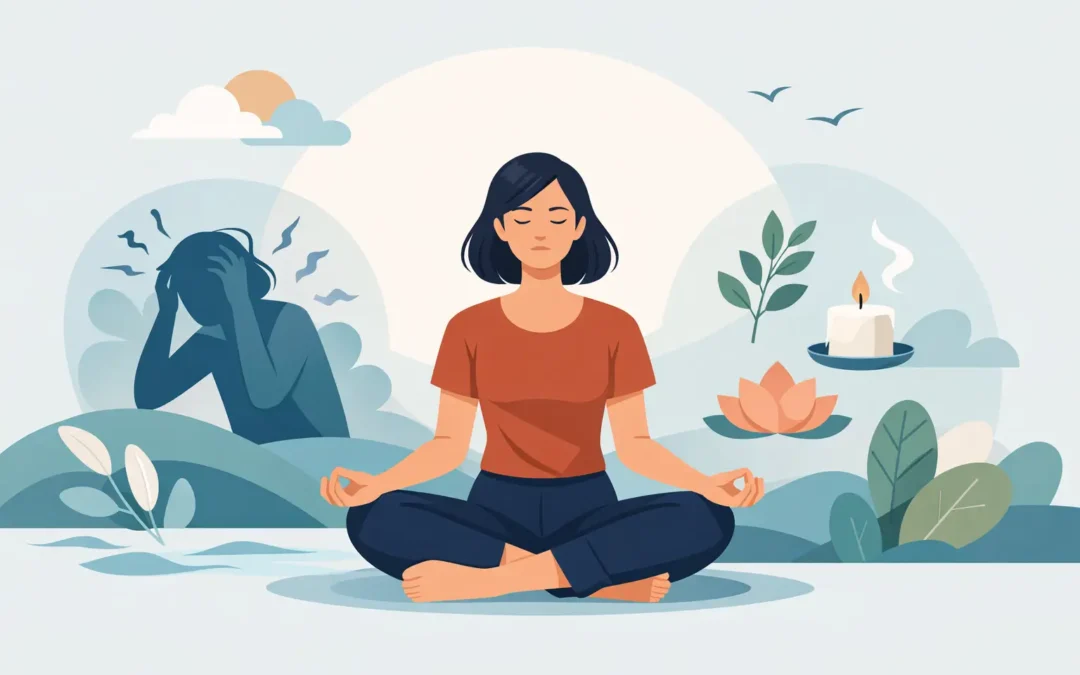
A panic attack can make a normal moment feel terrifying in seconds. Your chest tightens, your heart pounds, your thoughts race, and part of you may truly believe something is very wrong. If you are searching for how to calm panic attacks naturally, you are probably not looking for theory. You want something real you can do when your body feels hijacked and your mind cannot slow down.
The good news is that panic is powerful, but it is not all-powerful. Your nervous system can be supported. Your body can learn safety again. And while natural tools may not erase panic overnight, they can help you interrupt the spiral, reduce the intensity, and build more trust in yourself over time.
What helps during a panic attack
When panic hits, the first goal is not to force yourself to “calm down.” That usually adds pressure and frustration. The better goal is to help your nervous system feel a little less alone, a little less threatened, and a little more anchored in the present.
Start with your breath, but keep it simple. Many people are told to take a deep breath, yet during panic that can feel impossible or even make the sensation worse. Instead, try slowing your exhale. Breathe in gently through your nose for a count of three, then breathe out for a count of five or six. A longer exhale signals the body to shift out of alarm. If counting makes you tense, simply think soft inhale, slower exhale.
Grounding can help when your thoughts are racing ahead of you. Look around and name five things you see. Press your feet into the floor. Hold something cool in your hand. Notice the chair supporting your body. These are small actions, but they matter because panic pulls you away from the present. Grounding helps bring you back.
It also helps to speak to yourself clearly and directly. Try a phrase like, “This is panic. It feels intense, but it will pass.” Or, “My body is sounding an alarm, but I am safe in this moment.” You are not denying what you feel. You are giving your brain a more accurate message than the fear is giving you.
How to calm panic attacks naturally in the body
Panic is not just mental. It is deeply physical. That is why body-based strategies often work better than trying to reason your way out of it.
Temperature can shift the nervous system quickly. Splashing cool water on your face, holding a cold pack to your cheeks, or stepping into cool air may help reduce the surge. Gentle movement can help too. A slow walk, shoulder rolls, shaking out your hands, or stretching your neck can discharge some of the adrenaline that panic creates.
Posture matters more than many people realize. During a panic attack, the body often curls inward and braces. If you can, soften your jaw, lower your shoulders, and uncross your arms. You do not need to force a perfect posture. Just creating a little more space in your chest and belly can send a subtle signal of safety.
Sound can also be regulating. Some people calm faster with quiet. Others do better with steady, soothing music, white noise, or a familiar voice. It depends on your system. If silence makes you feel trapped in your symptoms, a grounding sound may help you reconnect to the outside world.
Why panic keeps coming back
If panic attacks feel random, that can make them even more frightening. But panic is often less random than it seems. Sometimes it is driven by chronic stress, unresolved trauma, grief, burnout, relationship strain, poor sleep, overstimulation, or a body that has stayed in survival mode for too long.
Caffeine is a common trigger. So is not eating enough, drinking too much alcohol, or pushing yourself past your limits for weeks at a time. For some people, panic grows after a major loss or life transition. For others, it starts after months or years of carrying stress silently.
This is where compassion matters. Your panic is not proof that you are weak or broken. It may be a sign that your system has been overloaded and needs support, not judgment.
Natural habits that reduce panic over time
Learning how to calm panic attacks naturally is not only about what to do in the worst moment. It is also about building a life that gives your nervous system fewer reasons to stay on high alert.
Sleep is foundational. Anxiety tends to get louder when your body is exhausted. A steady bedtime, less screen exposure before sleep, and reducing stimulating input late at night can make a real difference. This may sound basic, but basic does not mean small.
Blood sugar swings can mimic or worsen panic symptoms. Eating regularly, staying hydrated, and including protein with meals can help create more physical stability. If you tend to skip meals when stressed, this is an area worth paying attention to.
Daily movement supports the nervous system too. This does not have to mean intense workouts. Walking, yoga, stretching, or time outside can help your body process stress in a more complete way. The goal is not performance. The goal is regulation.
Practices such as mindfulness, guided relaxation, journaling, prayer, and body scanning can also help you notice anxiety earlier, before it becomes a full panic cycle. The best practice is the one you will actually return to consistently. If sitting still feels overwhelming, choose something more active or sensory.
When natural tools are not enough on their own
Natural approaches can be very effective, but there are times when self-help tools are not enough by themselves. If panic attacks are happening often, changing your behavior, affecting your work, disrupting sleep, or making you avoid driving, stores, social situations, or being alone, deeper support may be needed.
That does not mean you have failed. It means your system may need more than coping skills. It may need healing.
Therapy can help you understand what is fueling the panic underneath the symptoms. For some people, that means working through trauma. For others, it means learning how anxiety operates in the brain and body, strengthening emotional regulation, and creating new patterns of safety. Brain-based and somatic approaches can be especially helpful when panic feels bigger than logic.
At Jump Start Counseling and Neurofeedback, this is part of the heart of the work – helping people move from breakdowns into breakthroughs with support that honors both the mind and the nervous system.
A gentle plan for the next panic wave
You do not need a perfect routine. You need a few trustworthy steps you can return to when panic starts rising.
First, name what is happening. Say to yourself, “This is panic.” Second, slow the exhale rather than forcing a huge breath. Third, ground through your senses by looking around, touching something solid, or feeling your feet press into the floor. Fourth, release some tension in your body with cool water, movement, or softer posture. Fifth, remind yourself that the wave will peak and pass.
Afterward, be kind to yourself. Many people feel embarrassed, drained, or frustrated after a panic attack. Recovery matters too. Drink water. Eat something nourishing if you can. Rest. Notice whether there were triggers, but do not turn that reflection into self-criticism.
How to calm panic attacks naturally without fighting yourself
One of the hardest truths about panic is that fighting it often feeds it. The more urgently you try to make it stop, the more your body may interpret the moment as dangerous. This does not mean you should do nothing. It means the most effective response is often steady, grounded, and accepting rather than forceful.
Think of it as supporting your body through a surge instead of battling your body for having one. That shift can change everything. It builds trust. And trust is one of the most powerful antidotes to panic.
If you are in a season where panic has been stealing your peace, please hear this clearly: lasting relief is possible. Your body can learn a different pattern. Your mind can become less afraid of the sensations. And with the right support, you can move from bracing for the next attack to feeling more present, confident, and free.
Start with one natural tool today. Not all of them. Just one. Healing often begins that simply.
