
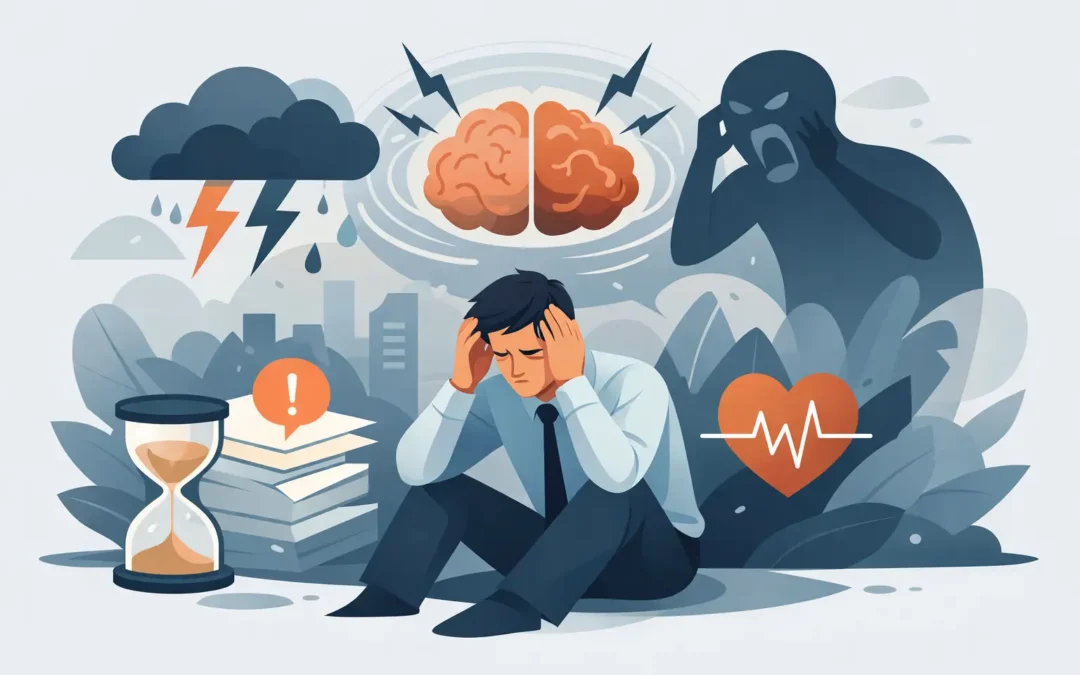
You may be folding laundry, sitting in traffic on I-240, or trying to fall asleep when it hits – a racing heart, shortness of breath, shaking, dizziness, and the terrifying thought that something is very wrong. If you have ever wondered, why does stress cause panic attacks, you are not overreacting and you are not weak. Your mind and body may be sounding an alarm after carrying too much for too long.
Panic attacks can feel sudden, but they usually do not come out of nowhere. Stress changes the way your nervous system functions. When that stress builds without enough recovery, your body can become more sensitive, more watchful, and more likely to misread discomfort as danger. That is why panic can show up during a busy season, after a loss, in the middle of relationship strain, or even once life finally slows down.
Why does stress cause panic attacks in the first place?
Stress is not just a mental experience. It is physical. When your brain senses a threat, it activates your fight-or-flight response. Stress hormones like adrenaline and cortisol prepare your body to act fast. Your heart beats harder, your breathing changes, your muscles tense, and your attention narrows.
That response is helpful when there is a real emergency. The problem is that chronic stress can keep the system switched on for too long. Instead of rising and falling as needed, your body stays on alert. Over time, it becomes easier for small sensations to trigger a big reaction.
A little chest tightness from fatigue may feel like danger. A skipped heartbeat after too much caffeine may feel catastrophic. Lightheadedness from shallow breathing may convince you that you are about to pass out. Once fear locks onto those sensations, panic can escalate quickly.
This is one of the most frustrating parts of anxiety. The body tries to protect you, but in the process it can create symptoms that feel threatening on their own. Then fear of the symptoms adds fuel to the fire.
Stress lowers your threshold for alarm
Think of your nervous system like a smoke detector. When it is working well, it alerts you to real danger and quiets down once the threat passes. Under chronic stress, that detector becomes overly sensitive. It starts reacting to burnt toast instead of an actual fire.
That does not mean the experience is imaginary. The pounding heart is real. The sweating is real. The sense of doom is real. But the emergency your body is responding to may be emotional overload, accumulated strain, unresolved trauma, lack of sleep, overstimulation, or internal pressure rather than immediate physical danger.
For some people, this sensitivity develops during a particularly stressful chapter. For others, it is connected to trauma history. If your system has learned that the world is unpredictable or unsafe, it may stay braced even when your thinking mind knows you are okay. This is why panic attacks often make more sense when we look at the whole person, not just the moment they occur.
The body can panic before the mind catches up
Many people assume panic attacks are caused only by anxious thoughts. Thoughts matter, but they are not the full story. Sometimes the body reacts first.
You may wake up in a panic before you have even formed a clear thought. You may feel overwhelmed in a crowded store and not understand why. You may notice that arguments, deadlines, grief, or emotional disconnection make you more vulnerable to panic even when you are trying to stay positive.
That is because the nervous system tracks patterns beneath conscious awareness. It responds to tone of voice, tension, exhaustion, sensory overload, memories, and relationship stress. If your system has been carrying too much, panic can feel like the body saying, I cannot hold this level of activation anymore.
How chronic stress builds toward panic
Usually, panic is not caused by one bad day. It is often the result of layers.
Maybe you have been sleeping poorly, pushing through work stress, worrying about money, and staying emotionally shut down because there has not been space to feel what you feel. Maybe your relationship has felt strained, or your body has been tense for months. Maybe you have been functioning on the outside while feeling flooded on the inside.
Stress can accumulate quietly. Then one more trigger – a conflict, a health scare, a long drive, a crowded room, a painful memory – pushes your system past its current capacity.
This helps explain why panic attacks can seem to arrive at inconvenient or confusing times. Sometimes they happen when you are finally off the clock. Sometimes they happen during rest because your body no longer has distraction to hold everything back. Sometimes they happen after a stressful season because the system is trying to come down and does not know how.
Why panic attacks feel so intense
Panic attacks are fueled by a loop between body sensations and fearful interpretation. Your heart races. You notice it and think, What is happening to me? That thought increases fear, which releases more adrenaline, which intensifies the sensations.
Soon, the symptoms themselves feel like proof that something terrible is happening. You may fear you are having a heart attack, losing control, going crazy, or about to die. Even when you have had panic before, each episode can still feel convincing.
This is one reason shame tends to make things worse. If you judge yourself for panicking, your body experiences even more threat. Compassion, on the other hand, helps interrupt the cycle. Not instantly, not perfectly, but meaningfully.
It depends on your history
Not everyone under stress has panic attacks. Personal history matters.
If you have a trauma background, a highly sensitive nervous system, a history of anxiety, chronic burnout, or repeated experiences of having to stay strong at all costs, stress may affect you more intensely. Hormonal shifts, illness, grief, substance use, caffeine, and lack of sleep can also make panic more likely.
This is why there is no one-size-fits-all answer. For one person, panic is closely tied to unresolved trauma. For another, it is driven by chronic overwork and perfectionism. For someone else, it is connected to relationship distress or long-term emotional suppression. The pattern can be different, but the message is similar: your system needs support, not criticism.
What actually helps when stress is triggering panic attacks
Relief usually starts when you stop treating panic as a personal failure and start understanding it as a nervous system response. That shift matters.
In the moment, simple grounding can help reduce escalation. Slowing your exhale, placing your feet firmly on the floor, naming five things you can see, or reminding yourself, This is panic, not danger, can help your body begin to settle. These tools may not erase the attack immediately, but they can reduce the sense of helplessness.
Longer term, the deeper work is about lowering your overall stress load and helping your nervous system relearn safety. That may include counseling, trauma-focused therapy, body-based regulation skills, better sleep support, boundaries, reducing stimulants, and honest attention to what your life is asking your body to carry.
For some people, talk therapy alone is not enough because panic lives so strongly in the body. Integrative support can be especially helpful when symptoms feel both emotional and physical. Approaches that work with brain and body patterns, including neurofeedback or trauma-informed methods such as EMDR, may help the system become less reactive over time. At Jump Start Counseling and Neurofeedback, that whole-person view is central because lasting change often happens when emotional, relational, and physiological stress are addressed together.
Why does stress cause panic attacks even when life looks fine?
This question comes up often, and it deserves a gentle answer. You can look capable and still be overwhelmed. You can be high functioning and deeply dysregulated. You can love your family, be grateful for your life, and still have a nervous system that is exhausted.
Panic does not always reflect what is visible from the outside. It often reflects what has gone unprocessed, unsupported, or unspoken. Your body keeps score of what your calendar, your responsibilities, and your relationships demand from you.
If panic attacks have become part of your life, that is not a sign that you are broken. It may be a sign that your system is asking for a new way forward – one with more support, more healing, and more room to breathe. Real change is possible, and it often begins by listening to what your body has been trying to say all along.
