
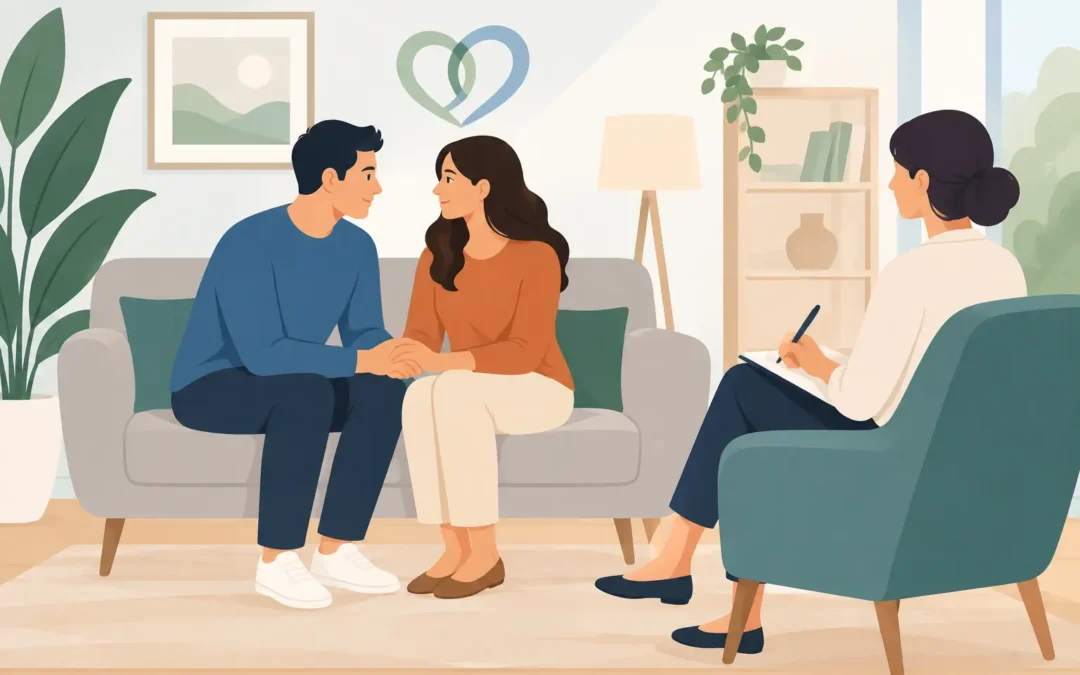
The same argument can start over something small: dishes left in the sink, a late text, money, intimacy, or who is carrying more at home. Yet beneath the surface, the real pain is often much bigger. One partner feels unseen. The other feels criticized, shut out, or like nothing they do is enough. The benefits of couples counseling begin when you no longer have to face those painful patterns alone.
Counseling is not about deciding who is right. It is a guided space to understand what is happening between you, speak more honestly, and create new ways of responding when life feels hard. Whether you are in a season of frequent conflict, growing distance, a broken trust, or simply want to protect a relationship that matters, support can help you move from survival mode toward connection.
Couples Counseling Helps You See the Pattern, Not Just the Problem
Most couples do not struggle because they do not love each other. They struggle because the same protective reactions take over again and again. One person pursues a conversation because they need reassurance. The other withdraws because they feel overwhelmed. The more one reaches, the more the other retreats.
Without support, it is easy to label your partner as the problem: too needy, too cold, too controlling, too detached. In counseling, you can slow the cycle down and name it with more compassion. That shift matters. When both people can see the pattern as the enemy, they have a better chance of working as a team.
A therapist can also help uncover what fuels the reaction. Old family experiences, trauma, anxiety, depression, grief, chronic stress, and major life transitions can all shape how we communicate and connect. Understanding the deeper story does not excuse harmful behavior. It gives you a clearer place to begin changing it.
Clearer Communication Without More Fighting
Many couples say, “We talk all the time, but nothing gets resolved.” The problem is not always a lack of conversation. It is often that conversations become reactive before either person feels heard.
One of the most practical benefits of couples counseling is learning how to communicate in a way that lowers defensiveness. This may mean speaking from your own experience instead of making accusations, asking for what you need directly, and listening for the feeling underneath your partner’s words. These sound simple, but they are difficult to do when hurt, fear, or resentment is already in the room.
Counseling gives you a place to practice. You can learn to say, “When plans change without a conversation, I feel unimportant and anxious,” rather than, “You never care about me.” Your partner can learn to respond with curiosity instead of immediately explaining, fixing, or fighting back.
That does not mean every conversation becomes easy. Healthy relationships still include disagreement. The difference is that conflict no longer has to become a threat to the relationship itself.
A Better Way to Handle Conflict
Couples counseling can help you recognize the early signs that a disagreement is escalating: raised voices, sarcasm, shutting down, bringing up old injuries, or trying to win. From there, you can develop agreements for pausing, calming your nervous system, and returning to the issue when both people can engage respectfully.
This is not avoidance. A productive pause has a purpose and a return time. It protects the relationship from words and reactions that can take days or years to repair.
Rebuilding Trust After Hurt
Trust can be damaged in many ways. Infidelity is one, but it is not the only one. Repeated broken promises, secrecy around spending, emotional withdrawal, substance use, dishonesty, or years of feeling dismissed can all create a deep sense of insecurity.
Repair is possible for many couples, but it takes more than an apology. The person who was hurt may need space to ask questions, express anger or grief, and see consistent accountability over time. The person who caused harm may need help facing the impact of their choices without collapsing into shame or becoming defensive.
Counseling creates structure for those difficult conversations. It helps couples distinguish between rebuilding trust and rushing past pain. It also helps them decide, honestly and carefully, whether both people are willing to participate in the work required for repair.
There is no guaranteed timeline. Trust grows through transparency, follow-through, empathy, and repeated experiences of safety. For some couples, that leads to a stronger relationship. For others, counseling provides the clarity needed to make respectful decisions about what comes next.
Restoring Emotional and Physical Connection
Distance often develops quietly. You may become efficient roommates, co-parents, or coworkers managing a household. There may be little affection, little playfulness, and no space to talk about what either of you truly needs.
Couples counseling makes room for the conversations people often avoid: intimacy, desire, rejection, loneliness, affection, boundaries, and unmet needs. These topics can feel vulnerable, especially if previous attempts ended in embarrassment or conflict. A compassionate therapist can help both partners talk about them without blame.
Emotional connection and physical connection are related, but they are not identical. Some couples need to rebuild emotional safety before physical intimacy feels possible. Others need support navigating differences in desire, health concerns, parenting demands, or the exhaustion that comes with a demanding season of life. There is no one “normal” relationship pattern to live up to. The goal is a connection that feels mutual, respectful, and alive for both people.
Counseling Builds Skills That Carry Into Daily Life
A meaningful breakthrough in session can feel relieving, but the real change happens in everyday moments. It happens when you choose a softer start to a hard conversation, notice your partner is overwhelmed, repair after snapping, or make time for connection before resentment builds.
Couples counseling can give you practical tools to carry home. You may create routines for checking in, learn how to make decisions more collaboratively, set healthier boundaries with family members, or identify the small gestures that help each person feel loved. These are not quick fixes. They are repeatable practices that make a relationship more resilient.
For couples dealing with the lingering effects of trauma, anxiety, or emotional overwhelm, support may also include attention to the nervous system. When a person is flooded, numb, or constantly on alert, it can be difficult to stay present during conflict. An integrative approach can honor both the emotional and body-based impact of distress, helping partners build more safety within themselves as well as with each other.
When Couples Counseling May Be Especially Helpful
You do not have to wait for a relationship to reach a breaking point. Counseling can be valuable before marriage, after becoming parents, during career or caregiving stress, or when you notice recurring tension that you cannot resolve on your own.
It can be particularly helpful when you are having the same fight repeatedly, avoiding important topics, recovering from a breach of trust, feeling more lonely together than apart, or considering separation but wanting clarity before making a major decision. It can also support couples who are generally doing well and want to strengthen their foundation.
Still, counseling is not a substitute for safety. If there is ongoing abuse, coercion, intimidation, or fear, joint sessions may not be appropriate at first. Individual support and a safety-focused plan may be needed. A qualified professional can help assess the situation with care.
What You Can Expect From the Process
The first sessions usually focus on understanding your relationship story, current concerns, strengths, and hopes for change. Both partners should have room to share their perspective. A good therapist does not take sides, but they will address harmful communication patterns and hold each person accountable for their part in the relationship.
Progress is rarely perfectly linear. You may leave a session feeling lighter, then have a difficult week as new emotions surface. What matters is whether you are gaining insight, practicing differently, and seeing more moments of honesty, safety, and repair over time.
At Jump Start Counseling and Neurofeedback, couples can receive compassionate support that respects both the pain they are carrying and their capacity to create something new. You do not have to have the perfect words before you begin. You only need a willingness to show up, tell the truth, and take the next step together.
A relationship does not need to be free of conflict to be healthy. It needs enough safety for two people to keep turning toward one another, especially when it would be easier to turn away. That choice, practiced with courage and support, can become the beginning of a new chapter.
