
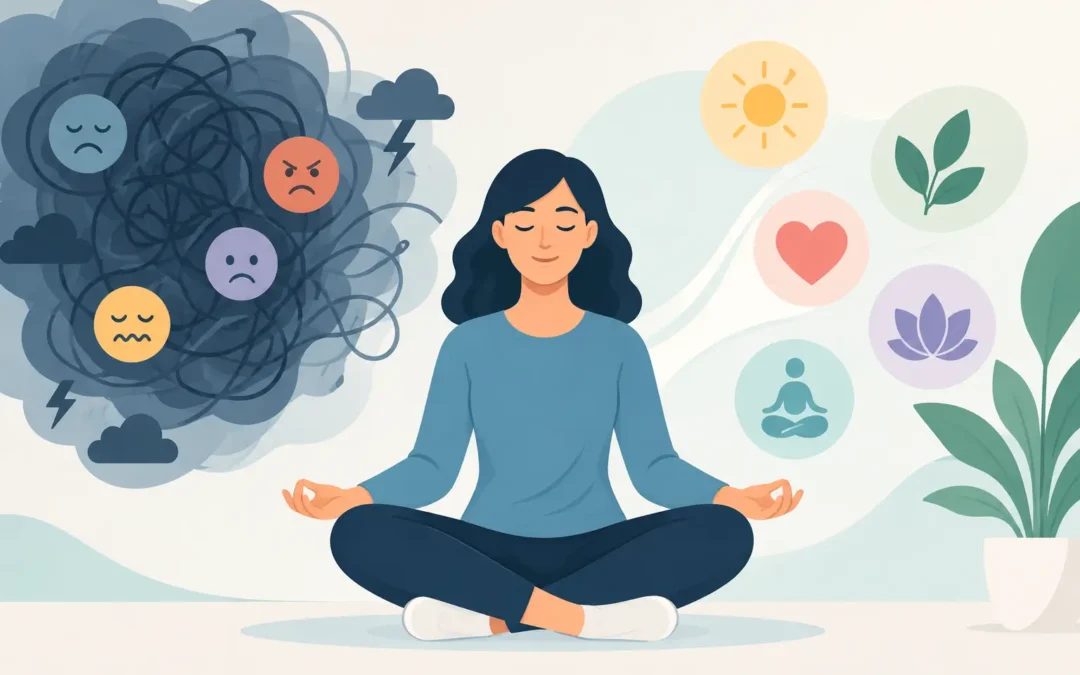
Some days, overwhelm does not look dramatic. It looks like staring at an unanswered text, crying in the car after work, snapping at someone you love, or feeling too tired to make one more decision. You may know what needs to be done, yet still feel unable to begin. The best ways to reduce emotional overwhelm are not about forcing yourself to “get it together.” They are about helping your mind and body feel safe enough to take the next small step.
Emotional overwhelm is often a signal that you have been carrying more than your system can process alone. Stress, grief, trauma, conflict, caregiving, work demands, chronic anxiety, and major life changes can all add up. Relief begins when you stop treating overwhelm as a personal failure and start responding to it with skill, honesty, and support.
What Emotional Overwhelm Is Trying to Tell You
When you are overwhelmed, your nervous system may shift into survival mode. You might feel restless and panicky, shut down and numb, unusually irritable, mentally foggy, or physically tense. Sleep, appetite, concentration, and relationships can suffer too.
This response is not a character flaw. It is your body trying to protect you from more input than it can comfortably handle. The goal is not to eliminate every difficult emotion. The goal is to build enough steadiness that emotions can move through you without running your entire day.
10 Best Ways to Reduce Emotional Overwhelm
1. Make the moment smaller
Overwhelm feeds on the belief that everything needs to be solved right now. Pause and ask yourself: What is the next five-minute need? It may be drinking water, replying to one email, stepping outside, taking a shower, or putting one load of laundry in the washer.
A small action does not solve your whole life, but it interrupts the frozen feeling that nothing is possible. Momentum often returns after your nervous system experiences one manageable success.
2. Name what you are feeling without judging it
Try using plain, specific language: “I feel scared about money,” “I am grieving,” “I am angry because I feel unsupported,” or “I am exhausted and stretched too thin.” Naming an emotion can create a little space between you and the feeling.
Avoid turning the feeling into an identity. “I am overwhelmed” can become “I am failing.” A more compassionate truth is: “I am experiencing overwhelm right now, and I need care.” That shift matters.
3. Ground your body before analyzing the problem
You cannot always think your way out of a nervous system alarm. Start with your body. Place both feet firmly on the floor. Look around and name five things you can see. Take a slower exhale than inhale for a few breaths. Hold something cool, stretch your shoulders, or walk around the block.
Grounding is not meant to dismiss what happened or make painful feelings disappear. It gives your body a message: I am here. This moment is real. I can come back to myself before deciding what to do next.
4. Reduce incoming demands for a while
When your internal capacity is low, even ordinary requests can feel like too much. Consider a brief pause from nonessential notifications, social media, news, or conversations that leave you depleted. This is not avoidance when it is intentional and temporary. It is creating room to recover.
You might also postpone decisions that do not need to be made today. Emotional overwhelm can make every choice feel urgent. Often, it is not.
5. Put your thoughts somewhere outside your head
A racing mind needs a container. Write down everything competing for your attention, without organizing it at first. Then sort it into three simple categories: what needs attention today, what can wait, and what is not yours to carry.
Journaling can also help you notice patterns. Perhaps overwhelm spikes after family interactions, at the end of a long workday, or when you have gone several days without rest. Awareness does not fix the pattern by itself, but it helps you respond earlier and more clearly.
6. Practice a boundary that protects your energy
Many people become overwhelmed not because they are incapable, but because they have been trying to meet everyone else’s needs while ignoring their own limits. A boundary can be as simple as, “I can’t talk about this tonight,” “I need more time to think,” or “I can help for an hour, but not all day.”
Setting limits may feel uncomfortable, especially if you are used to keeping the peace. But temporary discomfort can be healthier than ongoing resentment, exhaustion, or emotional shutdown. A caring boundary protects relationships as well as your well-being.
7. Reach for connection, not perfection
Overwhelm often tells people to isolate. You may worry about burdening someone or feel embarrassed that you are struggling. Yet safe connection can help regulate the nervous system. Tell one trusted person the truth in a simple way: “I am having a hard day and could use a calm voice,” or “Can you sit with me while I figure out my next step?”
Choose your support carefully. Not everyone has the capacity to respond well. The right person does not need to have perfect advice. They need to offer presence, respect, and a reminder that you do not have to carry this alone.
8. Support the basics without making them another project
Food, hydration, movement, rest, and daylight can affect emotional capacity more than we sometimes realize. When life feels heavy, keep the goal gentle. Eat something with protein. Open the blinds. Take a short walk. Go to bed a little earlier. These are not cures for trauma, depression, or anxiety, but they can make your system less vulnerable to spiraling.
If basic care feels impossible for days at a time, take that seriously. It may be a sign that your distress deserves more support than self-help can provide.
9. Notice when old pain is making the present feel bigger
Sometimes the intensity of overwhelm is tied to what is happening now. Other times, a current event touches an older wound: rejection, loss, unpredictability, criticism, or feeling unsafe. Your reaction may make more sense when you recognize that your body is responding to both the present and the past.
This is where compassionate curiosity helps. Instead of asking, “Why am I overreacting?” ask, “What does this situation remind my nervous system of?” You do not need to force yourself to relive painful experiences alone. Understanding the connection can be the beginning of meaningful healing.
10. Get professional support when overwhelm keeps returning
If emotional overwhelm is frequent, intense, or affecting your work, health, sleep, relationships, or ability to function, counseling can offer a more lasting path forward. Therapy gives you a protected place to process what you have been carrying, understand your triggers, and practice tools that fit your life.
For some people, especially those living with the effects of trauma or chronic stress, integrative support can be valuable. Approaches such as trauma-focused counseling, EMDR, and neurofeedback may help address patterns that feel deeply wired into the mind and body. The best approach depends on your history, goals, comfort level, and the kind of support that helps you feel safe.
When Overwhelm Needs Urgent Attention
Seek immediate help if you are thinking about harming yourself or someone else, feel unable to stay safe, are experiencing severe panic that will not settle, or are unable to manage essential daily needs. Contact emergency services, call or text 988 for the Suicide & Crisis Lifeline, or go to the nearest emergency room. You deserve support in the moment, not just after things become unbearable.
A New Beginning Can Start Small
You do not have to wait until you are completely burned out to ask for help. Emotional overwhelm is not proof that you are broken. It may be the part of you asking for rest, truth, boundaries, healing, and a different way forward.
At Jump Start Counseling and Neurofeedback, support is designed to meet you with compassion and help you move toward practical, lasting change. Your next step can be small. It can also be powerful: one honest conversation, one protected hour, one appointment, or one decision to believe that feeling better is possible.
