
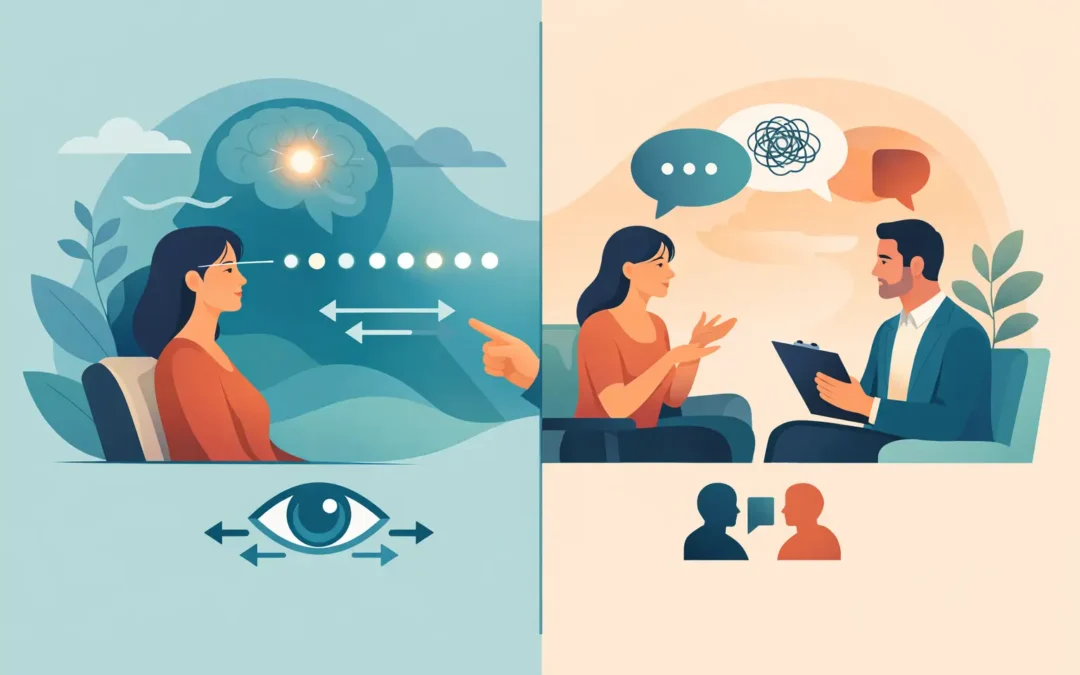
Some people come to therapy with a clear story they want to tell. Others come in saying, “I know something is wrong, but I can’t talk my way out of it.” That is often where the question of EMDR vs talk therapy becomes very real. If you are feeling stuck in anxiety, trauma, grief, depression, or emotional overwhelm, the right approach can make the difference between managing symptoms and finally creating movement.
The good news is that this is not a contest with one universal winner. Both EMDR and talk therapy can be deeply effective. The better question is this: what kind of healing does your nervous system, your history, and your life need right now?
EMDR vs talk therapy: what is the difference?
Talk therapy is exactly what most people picture when they think of counseling. You meet with a therapist, talk through what is happening, explore patterns, build insight, learn coping tools, and work toward change over time. Depending on the therapist’s approach, this may include processing emotions, examining relationships, challenging unhelpful thoughts, or building healthier ways of responding to stress.
EMDR stands for Eye Movement Desensitization and Reprocessing. It is a structured therapy approach often used for trauma, distressing memories, anxiety, and experiences that still feel emotionally “stuck” in the body and mind. EMDR does involve talking, but it does not rely on long verbal analysis in the same way traditional talk therapy often does. Instead, it helps the brain reprocess unresolved experiences so they no longer carry the same emotional charge.
That distinction matters. Some people understand their problems very well. They have insight. They can name the pattern, explain where it came from, and describe how it affects their life. Yet they still feel triggered, panicked, shut down, or overwhelmed. In those cases, insight alone may not create the shift they are hoping for.
How talk therapy helps
Talk therapy can be incredibly healing because it gives you space to be heard, understood, and guided. For many adults, that alone is powerful. When life has felt lonely, chaotic, or emotionally heavy, a steady therapeutic relationship can help you feel more grounded and less alone.
Talk therapy is often a strong fit when you are trying to understand recurring relationship issues, navigate grief, manage depression, process life transitions, improve communication, or build healthier coping skills. It can help you make sense of your inner world and become more intentional in how you respond to stress.
It also tends to be helpful when your goals involve ongoing support rather than one specific memory or symptom cluster. If you are facing burnout, struggling in your marriage, feeling disconnected from yourself, or repeating the same painful dynamics, talk therapy can create the kind of reflection and accountability that leads to lasting change.
Another strength of talk therapy is flexibility. Sessions can adapt to what is happening in your life right now. There is room to process your week, your emotions, your past, and your goals all in one place.
How EMDR helps
EMDR is often chosen when distress feels bigger than words. You may know you are safe, but your body still reacts as if danger is present. You may get flooded by memories, panic in situations that should feel manageable, or shut down in ways you cannot explain. That is where EMDR can be especially useful.
Rather than only talking about a painful experience, EMDR helps the brain process it differently. During treatment, the therapist guides you through a structured process that includes bilateral stimulation, often through eye movements, tapping, or alternating tones. This supports the brain’s natural ability to reprocess memories that have remained emotionally charged.
For many people, EMDR helps reduce the intensity of trauma responses. A memory that once felt immediate and overwhelming may begin to feel more distant, less activating, and less controlling. You still remember what happened, but it may stop hijacking your present life.
EMDR is commonly used for trauma, but trauma is broader than many people realize. It can include abuse, assault, accidents, grief, medical experiences, childhood neglect, betrayal, panic-inducing events, and repeated experiences of feeling unsafe or powerless. It can also help with performance anxiety, phobias, and certain negative beliefs like “I’m not safe,” “I’m not enough,” or “I have no control.”
EMDR vs talk therapy for trauma
When people compare EMDR vs talk therapy, trauma is usually the heart of the question. If you have lived through something painful and your nervous system still responds as if it is happening now, EMDR may offer a more direct route to relief.
Talk therapy can still help trauma survivors in meaningful ways. It can build safety, strengthen coping skills, reduce shame, and help you understand the impact of what happened. For some people, that is the right starting point. For others, it remains the best long-term approach.
But if you have spent months or years discussing your trauma and still feel trapped in the same body-based fear, flashbacks, hypervigilance, or emotional shutdown, EMDR may help reach what conversation alone has not shifted. It works with the way trauma is stored, not just the way trauma is explained.
That said, EMDR is not about forcing yourself through intense material before you are ready. Good EMDR therapy includes preparation, grounding, and pacing. Healing works best when you feel supported, not pushed.
Which one works faster?
This is one of the most common questions, and the honest answer is: it depends.
EMDR can sometimes create noticeable movement more quickly, especially when there is a clearly identified trauma or target memory. Clients often report that specific triggers lose intensity faster than they expected. That can feel like a breakthrough, especially after feeling stuck for a long time.
Talk therapy may take longer to produce that same kind of rapid symptom relief, but speed is not the only measure of progress. Some healing needs depth, repetition, and relationship. If your challenges are woven through identity, attachment, communication, and long-standing coping patterns, talk therapy may offer the broader support needed for sustainable change.
Sometimes the fastest path is not choosing one over the other. It is combining them thoughtfully.
Why many people benefit from both
This is where integrative care can be especially powerful. Talk therapy helps you build awareness, language, support, and practical tools. EMDR helps resolve the parts of distress that remain locked in the nervous system. Together, they can create both insight and movement.
For example, someone with childhood trauma may need talk therapy to strengthen boundaries, understand relationship patterns, and learn emotional regulation. At the same time, EMDR may help reduce the charge around the memories and beliefs that keep those patterns alive.
The same is true for anxiety and grief. You may benefit from talking through what has happened, while also using EMDR to process the moments your body still cannot settle around. Healing does not have to be either-or.
At Jump Start Counseling and Neurofeedback, this kind of whole-person approach matters because people are more than symptoms. Lasting change often comes from addressing the emotional, relational, and nervous system layers together.
How to know which approach is right for you
A simple starting point is to notice where you feel most stuck.
If you want space to explore your thoughts, relationships, life stress, communication patterns, or depression, talk therapy may be the natural first step. If you feel flooded by triggers, haunted by painful memories, or frustrated that you “know better” but still react the same way, EMDR may be worth considering.
Your readiness matters too. Some people are eager for a structured trauma-processing approach. Others need time to build trust, learn grounding skills, and feel emotionally steady before beginning EMDR. That is not failure. That is wise care.
It also helps to remember that therapy should fit you, not the other way around. The most effective approach is the one that honors your pace while still moving you toward relief, strength, and real change.
If you have been trying to think your way out of pain and getting nowhere, that does not mean you are broken. It may simply mean you need a method that reaches deeper than words. And if what you need most is a safe place to talk, untangle, and rebuild, that is healing too.
The right therapy is not the one that sounds most impressive. It is the one that helps you feel more like yourself again – calmer, clearer, more connected, and more able to live your life with freedom. That new beginning often starts with one honest question: what kind of support would help me move forward now?
