
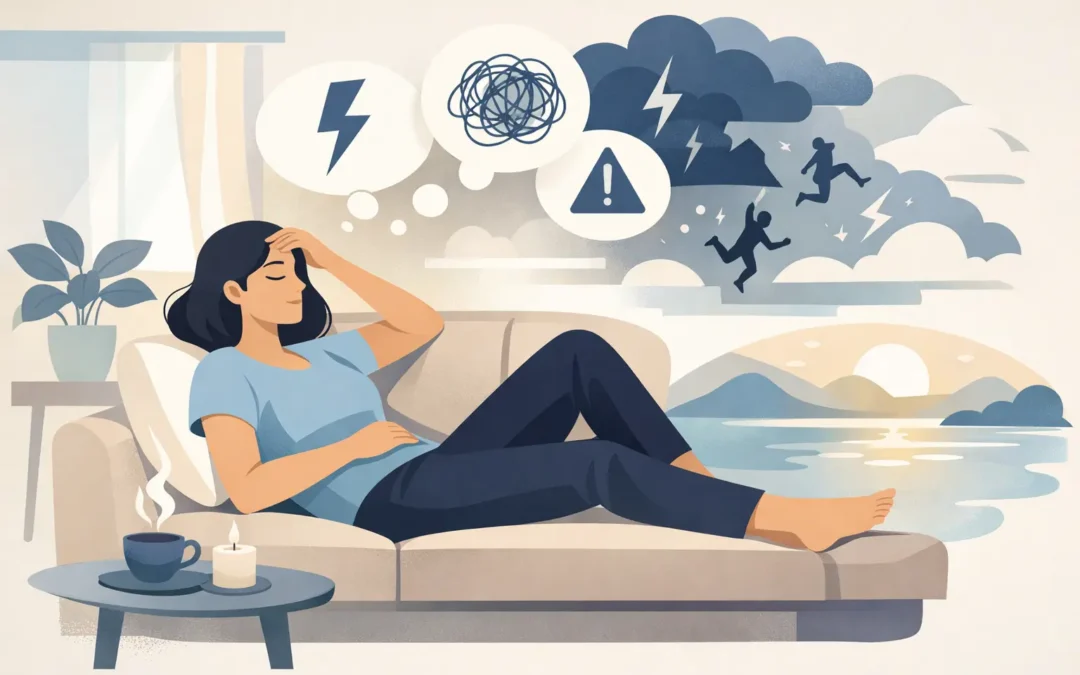
You finally have a quiet moment. The work is done, the house is calmer, your body has a chance to stop pushing so hard – and then anxiety shows up. If you have ever wondered, why do I get anxiety when I try to relax, you are not imagining it, and you are not failing at rest. For many people, slowing down can feel strangely unsafe.
That reaction is more common than most people realize. Relaxation is often treated like a simple skill, as if everyone should be able to sit still, breathe deeply, and feel better. But for people living with chronic stress, trauma, anxiety, grief, or emotional overload, rest can bring up the very sensations they have been working all day to avoid. Instead of relief, they meet racing thoughts, a tight chest, irritability, or the urge to get up and do something immediately.
Why do I get anxiety when I try to relax?
The short answer is that your nervous system may not read relaxation as safe yet. If your mind and body have spent a long time in survival mode, stillness can feel unfamiliar. And what feels unfamiliar can feel threatening, even when nothing is actually wrong.
Anxiety during rest is often less about the relaxing activity itself and more about what happens when the distractions fade. When you stop scrolling, working, caretaking, or pushing through your to-do list, your internal experience gets louder. Thoughts that were buried can rise to the surface. Emotions you have been holding together all day may finally ask for attention. Physical tension that was masked by motion becomes harder to ignore.
There is also a deeper layer for some people. If you grew up in an unpredictable environment, or if you have lived through trauma, your system may have learned that calm is temporary and danger could return at any moment. In that case, relaxing does not feel like peace. It feels like lowering your guard.
When rest feels unsafe to the body
Your body keeps score of what it has been through. Even when your logical mind knows you are home on the couch and technically safe, your nervous system may still be scanning for problems. That is why people sometimes feel a surge of anxiety during a bath, while lying in bed, during meditation, or on the first day of vacation.
This can be especially true for adults who are used to functioning at a high level while carrying hidden stress. You may appear capable, productive, and dependable. Underneath that, your body may be running on adrenaline. When the adrenaline drops, your system does not always settle smoothly. Sometimes it panics.
That does not mean your body is broken. It often means your body has become very skilled at protecting you, even if the protection is now showing up at the wrong times.
Hypervigilance can make calm feel uncomfortable
Hypervigilance is a state of constant monitoring. It is common in anxiety and trauma. When your system is used to scanning for what could go wrong, true relaxation can feel exposed. Part of you may believe that if you stop paying attention, something bad will happen.
People describe this in different ways. Some say they feel “on edge” the second things get quiet. Others say they suddenly remember everything they forgot to worry about. Some feel guilty when they rest, as if productivity is the only acceptable state. All of these experiences point to the same truth: your system may not trust rest yet.
Suppressed emotions often rise in quiet moments
Busyness can act like a lid. It keeps grief, anger, sadness, fear, and exhaustion tucked just out of reach. The moment you slow down, that lid loosens.
This is one reason rest can feel emotional instead of peaceful. The anxiety may actually be a blend of several feelings arriving at once. You may not just be anxious. You may be depleted, lonely, overwhelmed, or carrying old pain that has never had enough room to move through.
That is why forcing yourself to “just relax” often backfires. If your body is bringing up unfinished emotional material, a command to calm down may feel dismissive rather than helpful.
Why do I get anxiety when I try to relax after being stressed for so long?
Chronic stress changes your baseline. When your body gets used to pressure, speed, and vigilance, calm can feel too quiet. In a strange way, stress becomes familiar. Familiar does not mean healthy, but it does mean your system knows how to function there.
This is one of the harder truths about healing: peace can feel uncomfortable before it feels good. That transition period is real. If you have spent months or years bracing, your nervous system may need time and support to recognize that slowing down is not the same as giving up control.
There can also be practical factors. Caffeine, lack of sleep, unresolved conflict, burnout, hormonal shifts, or being emotionally overextended can all make the body more reactive. So the answer is not always purely psychological. Sometimes it is both emotional and physical, which is why a whole-person approach matters.
What helps when relaxing triggers anxiety
The goal is not to force deep relaxation on a nervous system that is not ready. The goal is to help your mind and body feel safer, one step at a time.
Start by making rest smaller and gentler. If lying still in silence sends your anxiety through the roof, that does not mean you are doing it wrong. It may mean you need a more regulated doorway into rest. A slow walk, light stretching, music, gentle movement, or sitting outside can be more effective than jumping straight into meditation.
It also helps to stay connected to the present through your senses. Notice the chair under you, the temperature in the room, the sound of a fan, or the feeling of your feet on the floor. Grounding is not flashy, but it helps your body learn that this moment is real and manageable.
Another powerful shift is to stop arguing with the anxiety. Instead of saying, “Why am I like this?” try, “Something in me does not feel safe slowing down yet.” That language creates compassion. And compassion lowers the pressure, which often lowers the alarm.
If thoughts flood in when you get quiet, try giving them a place to go before you rest. Journaling for five minutes, making a quick list for tomorrow, or naming what you are feeling can reduce the sense of internal chaos. You are not trying to solve your whole life before bed. You are simply telling your brain, “I am listening. You do not have to shout.”
When deeper support can make the difference
If relaxation consistently triggers panic, dread, agitation, or emotional flooding, it may be a sign that your system needs more than self-help strategies. This is especially true if you have a history of trauma, prolonged stress, difficult relationships, or feeling stuck in patterns you cannot think your way out of.
Therapy can help you understand what your anxiety is protecting, not just how to manage the symptoms. For some people, talk therapy is an important part of that work. For others, body-based approaches, trauma-focused therapy, EMDR, or neurofeedback may help calm patterns that feel bigger than words.
At Jump Start Counseling and Neurofeedback, this is part of the heart of the work: helping people move from survival mode into a life that feels more grounded, connected, and free. Real healing is not about becoming a different person overnight. It is about helping your system learn that peace is possible and that you do not have to stay trapped in constant alert.
You are not bad at relaxing
Many adults carry shame around this experience. They think, “Other people can unwind. Why can’t I?” But this is not a character flaw. It is information. Your anxiety is telling you something about your nervous system, your history, or the pressure you have been carrying for too long.
And that means change is possible.
You do not have to force yourself into perfect calm. You do not have to perform wellness. You can begin where you are, with honesty, patience, and the kind of support that helps your body feel safer in its own skin. Sometimes the first breakthrough is simply realizing that your reaction makes sense.
From there, rest can become less like a threat and more like a new beginning.
