
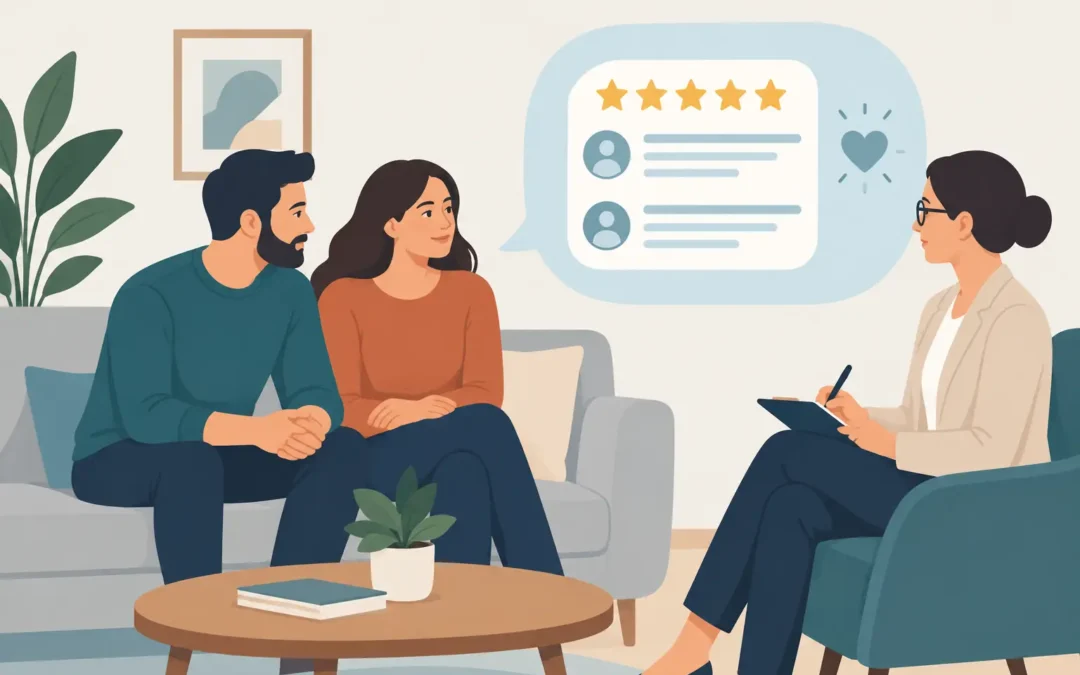
When a relationship feels strained, choosing a counselor can feel like one more difficult decision to make together. Couples therapy reviews may offer a helpful first impression, but they cannot tell you exactly what your own healing process will feel like. The most useful reviews do not promise a perfect relationship. They help you see whether a practice creates the safety, honesty, and practical support you need to begin again.
What Couples Therapy Reviews Can Reveal
Reviews can show patterns that are hard to find in a provider bio alone. You may learn whether clients felt respected, whether the therapist was warm and direct, or whether appointments helped people move beyond the same exhausting arguments. A review that describes feeling heard after months or years of disconnection can be meaningful, especially if being misunderstood has become part of your pain.
Look for language that reflects the experience you want to have. Couples often value comments about a therapist who remains balanced, makes room for both partners, and helps difficult conversations stay productive. It can also be reassuring to see that clients describe practical tools they can use between sessions, rather than leaving therapy with only more questions.
The strongest feedback usually sounds specific without sharing private details. For example, a person might say they felt less reactive, more confident setting boundaries, or more able to communicate needs without shutting down. Those are signs that therapy supported real change in daily life.
Still, reviews are snapshots. They reflect one person’s perspective, one point in time, and one set of needs. Your relationship has its own history, strengths, hurts, and hopes. A therapist who was ideal for another couple may not be the right fit for you, and that is okay.
Read for Fit, Not for Perfection
A five-star rating can feel reassuring, but a long list of glowing comments is not the whole story. Relationship counseling asks people to be vulnerable about resentment, betrayal, parenting conflict, intimacy, money stress, grief, or the slow distance that has grown between them. Progress can be meaningful and still feel uncomfortable at times.
Instead of searching for proof that therapy will be easy, read reviews for signs of fit. Does the counselor’s style seem aligned with what you need right now? Some couples want a calm space to slow down and understand the patterns beneath their conflict. Others need a more active, structured approach that interrupts destructive cycles and gives them new ways to respond in the moment. Many need both.
Pay attention to how reviewers describe the therapist’s presence. Words such as compassionate, grounded, honest, encouraging, and knowledgeable can point to a caring environment. Comments about being challenged can be positive too, if they also describe feeling supported. Good couples work is not about taking sides or telling either partner who is wrong. It is about helping both people understand the cycle they are caught in and choose a healthier way forward.
Signs a Review May Be Especially Helpful
Not every review deserves the same weight. A very short comment may still be genuine, but it may not give you much information. Reviews are more useful when they help you answer the questions that matter before you make contact.
Consider whether the feedback speaks to these areas:
- Emotional safety: Did clients feel welcomed, respected, and able to speak honestly?
- Balanced support: Did the therapist create room for both partners instead of appearing to favor one person?
- Practical progress: Did people mention tools, insights, or changes that carried into life outside the therapy room?
- Relevant experience: Does the review reflect concerns similar to yours, such as communication breakdowns, trust injuries, anxiety, trauma, or emotional disconnection?
- A clear process: Did clients feel the provider was organized, responsive, and clear about next steps?
These details cannot guarantee an outcome, but they can help you move from a vague feeling of uncertainty to better questions. That is a powerful first step when you and your partner have been feeling stuck.
What Reviews Cannot Tell You
No online review can fully show the therapeutic relationship. You cannot know from a comment whether you will feel comfortable speaking openly, whether the therapist understands your values, or whether their approach fits the pace at which each of you is ready to work. You also cannot judge clinical skill solely by star ratings.
Privacy adds another layer. Many people who have had a deeply positive counseling experience will never post about it because their relationship struggles are personal. A small number of reviews does not automatically mean a practice is less effective or less caring. It may simply mean clients chose to keep their healing private.
It is also wise to be cautious about reviews that promise instant transformation. Couples therapy can create breakthroughs, but lasting change usually involves practice. A new communication skill has to be used during a real disagreement. A healthier boundary has to be held when old fears arise. Trust, especially after repeated hurt, is rebuilt through many consistent moments.
Questions to Ask After Reading Couples Therapy Reviews
Once you have read a few reviews, turn your attention toward your own needs. What is happening in your relationship that you no longer want to carry alone? Are you trying to stop constant conflict, recover from a breach of trust, feel closer again, or decide what a healthy future looks like?
A consultation or first conversation can help you ask whether the provider works with your concerns and how they approach couples counseling. You might ask how sessions support partners with different communication styles, what progress can look like, or how the therapist handles moments when emotions run high. If trauma, anxiety, depression, or nervous system overwhelm are affecting the relationship, ask whether those concerns are considered as part of the work.
This matters because relationship distress is rarely only about the last argument. A partner may withdraw because they feel flooded. Another may criticize because they are scared of being ignored. Past losses, family patterns, chronic stress, and unresolved trauma can all shape how people connect. An integrative approach can be especially valuable when emotional pain is also showing up in the body through exhaustion, tension, sleep problems, or a constant sense of alarm.
At Jump Start Counseling and Neurofeedback, couples can explore relationship concerns with compassionate counseling that honors both emotional insight and practical change. The goal is not to force a relationship into a particular outcome. It is to help each person show up with greater awareness, courage, and clarity.
Give the First Step a Fair Chance
The right therapist does not need to be perfect. You need someone with whom both partners can begin building enough trust to be honest. After the first session or two, notice what you experience. Did you feel respected? Did the therapist understand the heart of the problem? Did you leave with a little more hope, direction, or willingness to keep trying?
Sometimes one partner is ready for counseling and the other is skeptical. That does not mean the process cannot help. Skepticism often protects someone who has been disappointed, blamed, or pressured before. A thoughtful counselor can make space for that hesitation without letting it prevent the conversation from moving forward.
Your relationship may not need more advice from friends, another late-night argument, or another promise to do better without support. It may need a place where both of you can slow down, tell the truth, and learn a different way of being together. Let reviews guide your research, then let a real conversation help you decide whether this is the beginning your relationship has been asking for.
