
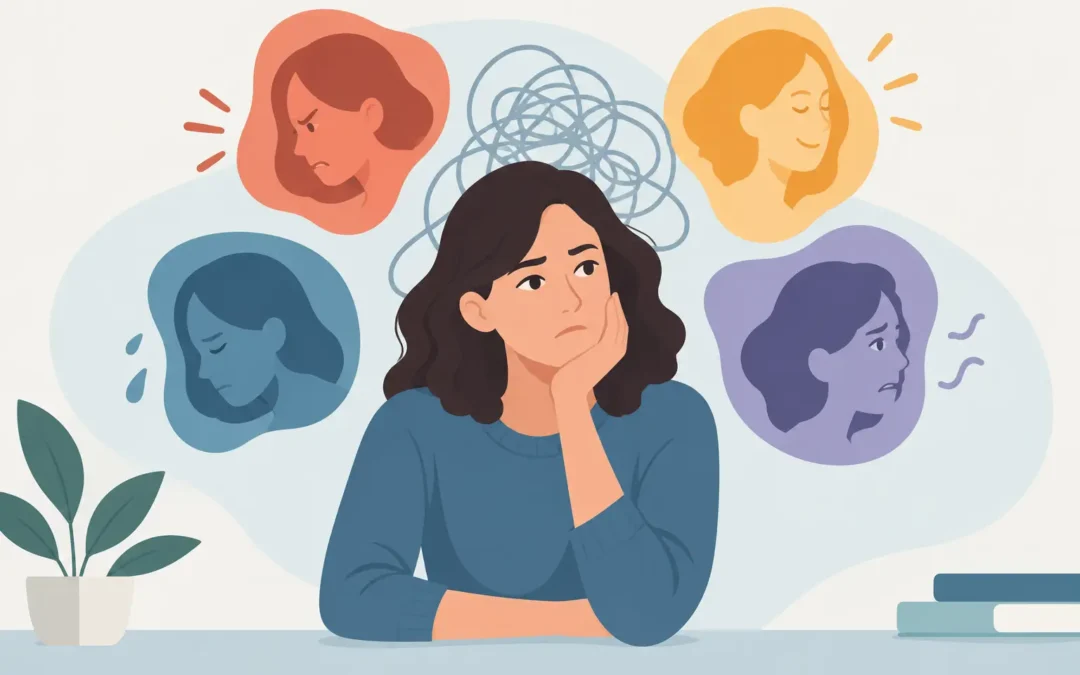
You may know the feeling: a small disappointment turns into an overwhelming wave of anger, tears, panic, or numbness. Later, you may wonder why you reacted so strongly or feel ashamed that you could not simply “get over it.” Understanding what causes emotional dysregulation can replace self-blame with something more useful: clarity, compassion, and a path forward.
Emotional dysregulation does not mean you are broken, dramatic, or incapable of coping. It means your emotional and nervous systems are having difficulty returning to a settled state after stress. For some people, that looks like intense reactions. For others, it looks like shutting down, disconnecting, people-pleasing, or feeling nothing at all.
What Causes Emotional Dysregulation?
There is rarely one single cause. Emotional regulation develops through a combination of biology, early relationships, life experiences, health, and current stress. A person can be deeply capable and self-aware yet still become overwhelmed when too many demands land on an already taxed nervous system.
The goal is not to eliminate emotion. Anger can signal a crossed boundary. Grief reflects loss. Anxiety can alert us to possible danger. Regulation is the ability to notice what you feel, respond with greater choice, and return to balance without harming yourself, your relationships, or your sense of safety.
Chronic stress can keep the body on high alert
When work pressure, caregiving, financial strain, health concerns, conflict, or lack of rest continue for months or years, the body may begin to operate as though danger is always nearby. You might become more irritable, forgetful, tearful, restless, or easily startled. Minor problems can feel enormous because your internal reserves are already depleted.
Stress is not only about how much is on your calendar. It is also about whether you have enough support, recovery time, sleep, nourishment, and emotional safety to meet those demands. Someone may appear highly functional at work while privately feeling one disagreement or unexpected change away from falling apart.
Trauma can shape the nervous system’s protective responses
Trauma is a common contributor to emotional dysregulation. This can include a single frightening event, such as an accident or assault, but it can also involve ongoing experiences: childhood neglect, abuse, unstable caregiving, racism, bullying, relationship betrayal, medical trauma, or living in a home where emotions were met with criticism or fear.
After trauma, the nervous system may respond quickly to cues that resemble past danger, even when the present situation is different. A raised voice, a delayed text, a partner pulling away, or feeling misunderstood can trigger fight, flight, freeze, or fawn responses. The reaction is real, even if another part of you knows you are safe.
This is why insight alone does not always create relief. Talking through a painful experience can be valuable, but healing often also involves helping the body learn that the threat has passed. Trauma-informed counseling, EMDR, and brain-based supportive approaches may help people process what happened while building a stronger sense of present-day safety.
Early attachment experiences matter
Children learn emotional regulation in relationship with caring adults. When a child is upset and someone consistently helps them feel seen, soothed, and safe, they gradually develop the ability to manage difficult feelings. When that support is missing, unpredictable, dismissive, or frightening, emotions may later feel confusing or dangerous.
This does not mean parents must be perfect, nor does it mean every adult struggle can be traced to childhood. It does mean that old patterns can be powerful. Adults who grew up having to stay quiet, be useful, manage a parent’s moods, or handle problems alone may find it hard to ask for help, tolerate conflict, or trust closeness.
The good news is that regulation can be learned at any age. A steady therapeutic relationship and healthier relationships outside therapy can offer new experiences of being heard, respected, and supported.
Anxiety, depression, grief, and other mental health concerns can intensify emotions
Emotional dysregulation may occur alongside anxiety, depression, post-traumatic stress, attention-related challenges, substance use, or mood disorders. These conditions can affect concentration, energy, impulse control, sleep, and the ability to recover after an upsetting event.
For example, anxiety can make the mind scan constantly for what might go wrong. Depression may make ordinary tasks feel impossibly heavy, leaving little capacity for frustration or disappointment. Grief can arrive in sudden surges long after a loss, especially around anniversaries, places, songs, or family events.
A thorough assessment matters because similar behaviors can have different roots. A quick temper, emotional numbness, or difficulty sleeping is not a diagnosis by itself. Looking at the full picture helps guide care that fits your actual needs instead of forcing a one-size-fits-all answer.
Physical factors can lower your emotional capacity
Your body and emotions are not separate systems. Poor sleep, chronic pain, hormonal changes, illness, medication changes, blood sugar swings, alcohol or drug use, and burnout can all make emotional responses harder to manage. Even dehydration, hunger, or days spent without rest can shorten your fuse.
This is not a suggestion that emotional pain is “all physical.” It is an invitation to take your whole experience seriously. Sometimes emotional healing includes trauma processing and relationship work. Sometimes it also means speaking with a medical provider, improving sleep routines, reducing overstimulation, or creating more predictable meals and movement.
Relationship patterns can keep the cycle going
Dysregulation often becomes most visible in close relationships because those relationships matter so much. One partner may pursue reassurance while the other withdraws. A difficult conversation escalates, both people feel unheard, and the same painful pattern repeats. Over time, each person may begin bracing for the next conflict.
This pattern is not proof that a relationship is doomed. It is often a sign that both nervous systems need more safety, clearer communication, and better repair after conflict. Couples counseling can help partners slow down the cycle, identify what is happening beneath the argument, and practice responding differently.
Signs Your Nervous System May Need Support
Emotional dysregulation can look different from person to person. You may experience reactions that feel bigger than the situation, panic or rage that comes on quickly, frequent crying, impulsive words or actions, or a tendency to isolate after conflict. You may also feel emotionally flat, disconnected from your body, unable to make decisions, or exhausted from holding everything together.
Pay attention to the aftermath as well. Do you need hours or days to recover from a stressful interaction? Do you replay conversations, feel intense guilt, or struggle to remember what happened when you were upset? These are not character flaws. They are signals that your system may be carrying more than it can comfortably hold.
If you are having thoughts of harming yourself or someone else, feel unable to stay safe, or are in immediate danger, contact emergency services or a crisis resource right away. You deserve immediate support in those moments.
Building Regulation Is a Practice, Not a Personality Trait
The first step is often learning to notice your early signals. Maybe your chest tightens, your thoughts speed up, your jaw clenches, or you suddenly want to leave the room. Catching those signs sooner creates a small but meaningful pause between the trigger and your response.
From there, simple grounding can help: feel your feet on the floor, lengthen your exhale, name five things you see, step outside, or place a hand over your heart. These tools are not meant to dismiss the problem. They help create enough steadiness to decide what you need next.
Lasting change usually comes from more than calming techniques alone. It may involve processing unresolved trauma, practicing boundaries, grieving losses, addressing relationship patterns, and learning how to care for your body before it reaches a breaking point. Integrative support can be especially helpful when you understand your triggers intellectually but still feel hijacked by them in the moment.
You do not have to wait until your reactions damage a relationship, job, or sense of self to seek help. With compassionate support and practical tools, your breakdowns can become information, your patterns can become understandable, and a new beginning can start with one steady next step.
