
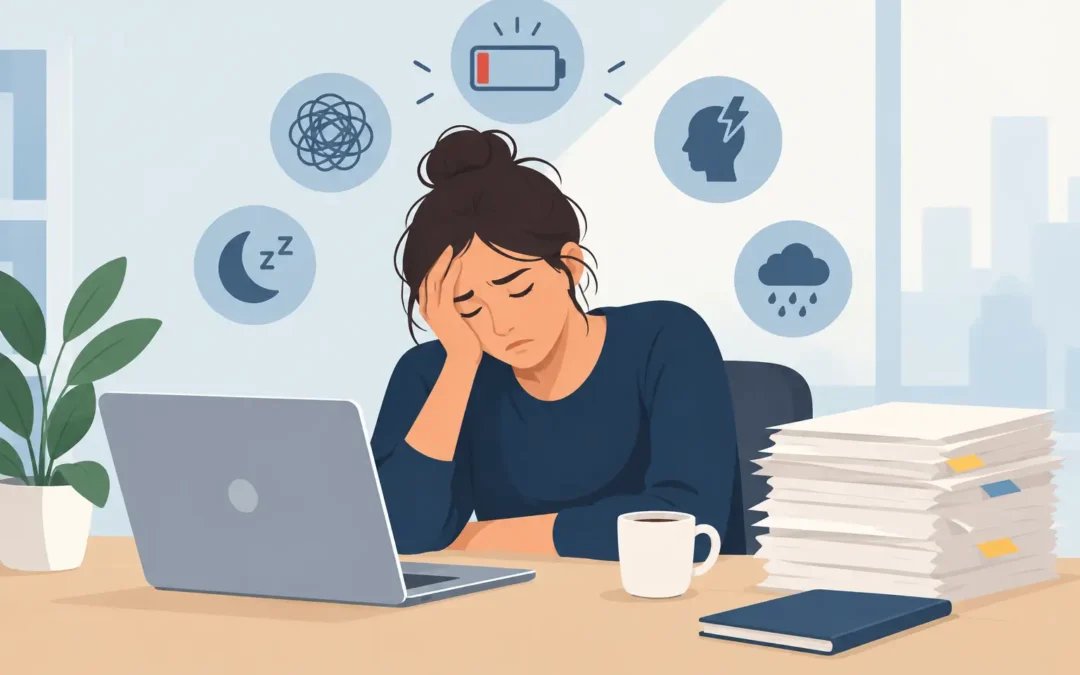
You may still be getting through the day. You may be answering messages, showing up for work, caring for everyone else, and telling yourself you just need a weekend to reset. But the best signs of burnout often appear long before a person reaches a full stop. They show up in the quiet loss of patience, the dread before a normal task, and the feeling that even rest is no longer reaching you.
Burnout is not a personal failure or proof that you are not strong enough. It is often what happens when stress has been asking too much of your mind, body, and emotions for too long. Recognizing it is not about labeling yourself. It is about giving yourself an honest chance to change course.
What Burnout Can Look Like in Real Life
Burnout is more than being busy or having a hard week. It is a state of emotional, mental, and often physical depletion that can develop when demands consistently outweigh recovery, support, or a sense of control. Work can be a major source, but burnout can also grow from caregiving, parenting, grief, relationship strain, financial pressure, trauma, or the exhausting effort of holding everything together.
Not everyone experiences it the same way. Some people become tearful and overwhelmed. Others become numb, detached, or unusually quiet. You do not have to relate to every sign for your experience to deserve attention.
10 Best Signs of Burnout to Notice Early
1. Rest does not feel restorative
A good night’s sleep, a day off, or a relaxing weekend used to help you recover. Now, you wake up tired anyway. You may sleep longer but still feel foggy, heavy, or unable to face what is ahead. This is not always burnout, since sleep issues and medical concerns can also affect energy, but ongoing exhaustion is worth taking seriously.
2. Small tasks feel strangely hard
Making a decision, returning a call, folding laundry, or opening an email may suddenly feel like too much. You may put off simple responsibilities, then criticize yourself for avoiding them. When your internal resources are drained, ordinary tasks can begin to feel disproportionately demanding.
3. You are more irritable than usual
Burnout often shortens your emotional fuse. A minor inconvenience can bring on anger, tears, or a level of frustration that surprises you. You may snap at people you love, feel impatient with coworkers, or become upset by sounds, requests, and interruptions you once handled with ease.
Irritability does not mean you are becoming unkind. It can be a signal that your nervous system has been carrying too much for too long.
4. You feel disconnected from people and things you care about
One of the clearest signs can be a loss of connection. You may stop enjoying hobbies, withdraw from friends, or feel emotionally absent in conversations. At work, you might become cynical or detached. At home, you may go through the motions while feeling far away from your own life.
This distance can be protective at first. When feelings become overwhelming, shutting down can seem easier than staying open. Over time, though, disconnection can make burnout feel even more isolating.
5. Your body is asking for attention
Stress does not stay neatly in the mind. Burnout may come with headaches, jaw tension, stomach issues, muscle pain, changes in appetite, racing thoughts, or a constant sense of being on edge. Some people feel wired but exhausted. Others feel slowed down and physically heavy.
Physical symptoms always deserve appropriate medical attention, especially when they are new, severe, or persistent. At the same time, it can be helpful to ask whether your body has been carrying emotional pressure that has not had room to move.
6. Concentration has become a struggle
You reread the same paragraph, forget why you walked into a room, lose track of conversations, or make mistakes that are not typical for you. Mental fog can feel frightening, especially for capable people who are used to being organized and dependable.
Burnout can reduce your ability to focus because your brain is spending so much energy managing stress. This is not laziness. It is a sign that you may need more support, recovery, and space than you have been giving yourself.
7. You feel trapped, helpless, or constantly behind
Burnout can create the sense that there is no way out. Your to-do list may feel endless, and even accomplishments may bring little relief. You might think, “Nothing I do is enough,” or “I cannot keep living like this,” while also feeling unable to imagine what could change.
That feeling of being stuck is painful, but it does not mean you are without options. Sometimes the first breakthrough is simply naming what is happening instead of trying to push through it alone.
8. Your coping habits are getting more extreme
You may find yourself relying more heavily on scrolling, alcohol, food, work, spending, isolation, or staying constantly busy just to avoid how depleted you feel. Coping strategies are human. The concern is not that you need comfort. It is when the things meant to help you cope leave you feeling worse, less present, or more disconnected afterward.
9. You have lost your sense of purpose
Tasks that once mattered may now feel meaningless. You may question your career, your relationships, or your ability to make a difference. Sometimes this is a sign that real change is needed in your circumstances. Other times, burnout has simply made it difficult to feel the meaning that is still there.
It takes time and support to tell the difference. You do not have to make every major decision while exhausted.
10. You keep telling yourself it is not that bad
Minimizing is common, especially for people who are used to being the strong one. You may compare yourself to someone who seems to have it harder or insist that you should be grateful and stop complaining. Gratitude and struggle can exist together. Your pain does not have to be the worst pain in the room to deserve care.
Burnout, Depression, and Anxiety Can Overlap
Burnout can look a lot like anxiety or depression, and sometimes they occur together. Persistent sadness, hopelessness, loss of interest, panic, severe sleep changes, or thoughts of harming yourself deserve prompt professional support. If you are in immediate danger or thinking about suicide, call or text 988 in the United States, call 911, or go to the nearest emergency room.
For many people, the question is not whether their distress has the perfect name. The question is whether life has become harder to manage, less connected, and less like themselves. That is enough reason to reach out.
What Helps When You Recognize Burnout
The answer is rarely to simply become more productive. Recovery begins with reducing the pressure to perform through exhaustion and making room for what you actually need. That might mean setting one clearer boundary, asking for help with a responsibility, protecting sleep, spending less time with draining commitments, or allowing yourself to say no without writing a long explanation.
Support can also help you understand the deeper pattern. For some people, burnout is tied to perfectionism, people-pleasing, unresolved trauma, grief, or a lifelong habit of putting everyone else’s needs first. Counseling can offer a steady place to process what has been building and develop practical ways to respond differently. An integrative approach may also include tools that support nervous system regulation, emotional processing, and a greater sense of balance.
At Jump Start Counseling and Neurofeedback in Asheville, support is designed to meet people where they are – not where they think they should be. Whether you are emotionally overwhelmed, disconnected in your relationship, or simply tired of surviving from one obligation to the next, there is room to begin again at your own pace.
You do not need to wait until you collapse to take your exhaustion seriously. Let one honest moment of recognition be the beginning of a gentler, stronger next step toward a life that has room for you, too.
