
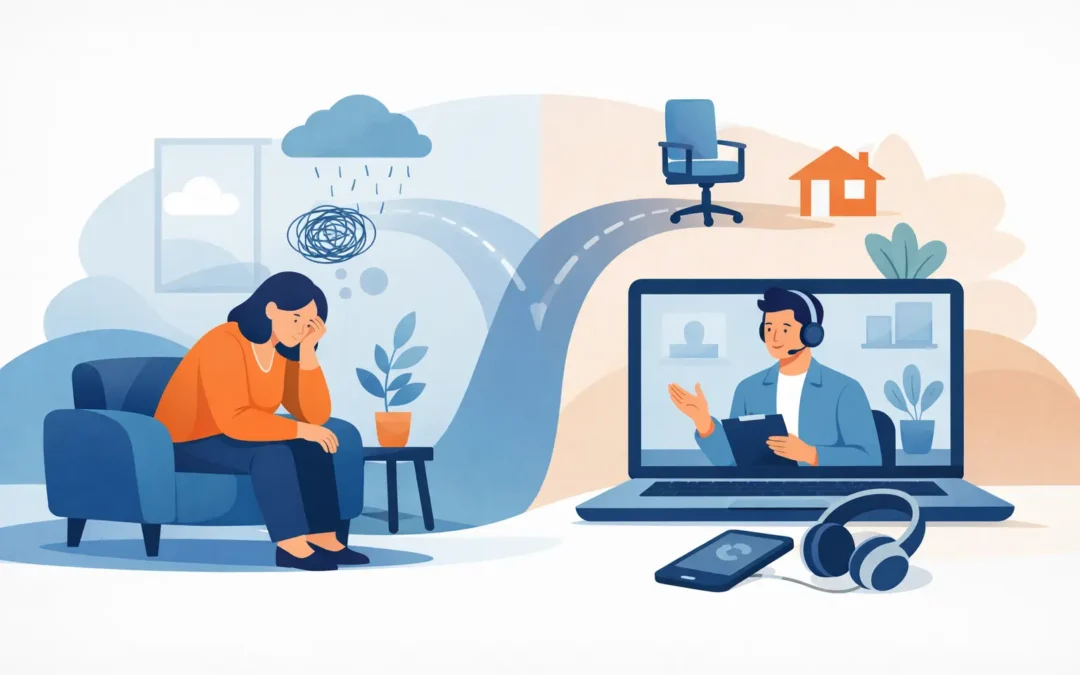
When depression makes getting dressed, driving across town, or sitting in a waiting room feel like more than you can manage, getting support should not require another impossible task. Teletherapy for depression brings professional counseling into a space that may already feel safer: your home, office, or another private place where you can show up as you are.
Online therapy is not a shortcut or a lesser form of care. For many adults, it is a practical, deeply personal way to begin working through the heaviness, numbness, self-criticism, exhaustion, and disconnection that depression can bring. The format is different, but the heart of therapy remains the same: a real relationship, honest conversation, and a plan for moving toward relief and a fuller life.
What teletherapy for depression can offer
Depression rarely stays neatly contained in your thoughts. It can affect sleep, appetite, concentration, motivation, work performance, relationships, and the ability to feel present in your own life. You may know you need help while also feeling too drained to search for it, commute to an appointment, or explain what is wrong.
Teletherapy removes some of those barriers. You meet with a licensed counselor through a secure video platform, usually from a phone, tablet, or computer. Instead of spending time in traffic or trying to arrange coverage for a busy schedule, you can devote that energy to the work of healing.
For some people, being at home makes it easier to open up. There is comfort in having a familiar blanket nearby, being able to take a few quiet minutes after a hard session, or not having to put on a public face before returning to daily responsibilities. For others, online sessions create a helpful sense of emotional distance that makes vulnerable conversations feel more manageable at first.
That convenience matters, but it is not the whole benefit. Effective counseling helps you understand what is feeding the depression, not simply push through another difficult week. A therapist may help you recognize patterns of isolation, perfectionism, unresolved grief, trauma responses, relationship stress, or harsh internal beliefs that keep you feeling stuck. Together, you can build practical ways to respond differently.
How online counseling works in real life
A teletherapy appointment often looks much like an in-person counseling session. You and your therapist meet at a scheduled time, check in about what has been happening, and focus on the concerns that feel most urgent or meaningful. Some sessions may center on coping with a difficult day. Others may explore long-standing experiences that have shaped how you see yourself and the world.
Therapy for depression should not require you to have the perfect words. You may arrive feeling flat, scattered, frustrated, or unsure where to begin. A compassionate therapist can help you slow down and identify what is underneath the feeling of “I just can’t do this anymore.” Depression often tells people they are failing when they are actually carrying too much for too long.
The work may include emotional processing, learning to notice unhelpful thought patterns, setting small achievable goals, improving boundaries, and rebuilding routines that support your nervous system. It can also include making room for grief, anger, fear, or disappointment that has been pushed aside. Progress is not always dramatic from one week to the next. Often, it begins quietly: getting out of bed with a little less dread, answering a text, sleeping more consistently, or realizing you spoke to yourself with more kindness.
Privacy makes a difference
To get the most from teletherapy, choose a place where you can speak freely and where others cannot overhear you. Headphones can help. Some clients sit in a parked car, use a private room at work, or schedule sessions while family members are out of the house. Your therapist can also talk with you about a backup plan in case your connection drops.
Privacy is not about creating a perfect setting. It is about giving yourself enough room to be honest. If home is the source of your stress or does not feel emotionally safe, in-person counseling may be a better fit, at least for now.
When teletherapy may be especially helpful
Teletherapy can be a strong option for adults whose depression is making everyday logistics harder. It may fit well if you have a demanding job, caregiving responsibilities, limited transportation, chronic pain, mobility concerns, or live outside Asheville and want access to a therapist who serves North Carolina residents.
It can also support continuity. Life does not pause when you begin therapy. Work trips, weather, a sick child, and changing schedules can interrupt in-person appointments. Meeting online may make it easier to protect the consistency that meaningful therapeutic change often requires.
Still, the best choice depends on you. Some people feel more connected face-to-face and value the physical separation between therapy and home. Others prefer a mix of in-person and virtual sessions. The right format is the one that helps you feel safe enough to engage, supported enough to be honest, and able to attend consistently.
Depression deserves more than quick coping tips
A walk outside, better sleep, a supportive friend, and breathing exercises can all be valuable. But when depression has settled into your daily life, quick coping strategies may not be enough on their own. If you keep telling yourself you should be able to handle it, yet the fog keeps returning, that is not a character flaw. It is a sign that you may need more support.
At Jump Start Counseling and Neurofeedback, therapy is approached as a path toward real transformation, not a place to merely repeat the pain. Counseling can help you understand your story and make practical changes, while integrative supports may be considered when appropriate to your goals and care plan. The focus is on helping you reconnect with your own strength, emotional clarity, and capacity to participate in your life again.
Depression can have many roots. Sometimes it is connected to trauma, loss, burnout, a painful relationship, major life changes, or years of putting everyone else first. Sometimes it arrives without one clear explanation. A thoughtful therapist will not force your experience into a simple story. Instead, they will help you explore what is true for you and determine what kind of support may help.
What to look for in a teletherapist
The relationship with your therapist matters as much as the technology. Look for someone licensed to provide care where you are located and experienced in treating depression. During an initial consultation or first appointment, pay attention to whether you feel heard without being rushed, judged, or talked over.
You also deserve clarity. Ask how the therapist approaches depression, what sessions typically involve, how progress is evaluated, and whether teletherapy is appropriate for your current needs. Good care is collaborative. Your therapist brings professional training and perspective; you bring expertise about your life, values, and what change needs to look like for you.
It is okay if the first therapist you speak with is not the right fit. Finding a connection can take courage, especially when depression has already drained your hope. Keep going. The right support can make the next step feel possible.
Know when more immediate help is needed
Teletherapy can be effective for many levels of depression, but it is not a substitute for emergency support. If you are thinking about harming yourself, feel unable to keep yourself safe, or are experiencing a mental health crisis, call or text 988 for the Suicide & Crisis Lifeline, call 911, or go to the nearest emergency room. If possible, tell a trusted person what is happening and ask them to stay with you.
Reaching for urgent help is not an overreaction. It is an act of protection. Depression can distort your sense of what is possible, but intense feelings can change, and you do not have to carry them alone.
You do not need to wait until you are completely depleted to ask for help. One private conversation can be a beginning: a place to set down what you have been carrying, understand what has been holding you back, and take one honest step toward a new direction. Your life is more than this difficult chapter, and support can help you feel that truth again.
