
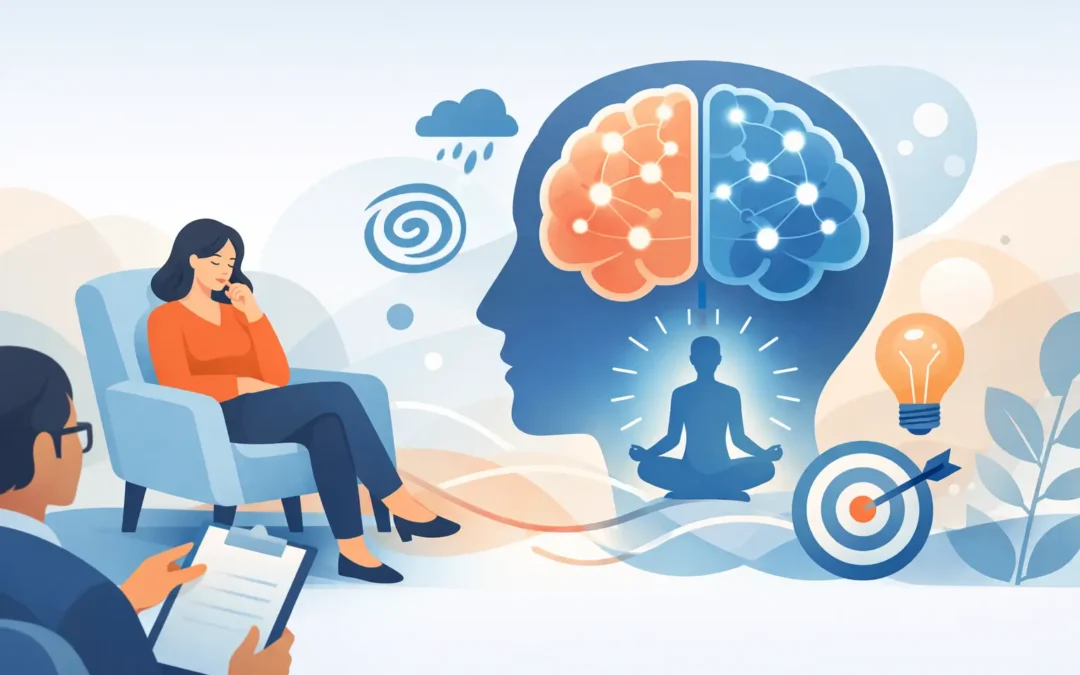
Your mind may tell you that everything is fine while your body is already bracing for the next problem. Your chest tightens before a meeting. Sleep feels light and restless. Small decisions feel strangely exhausting. Brain based therapy for anxiety recognizes that anxiety is not simply a matter of “thinking positive” or trying harder. It is often a whole-person experience involving thoughts, emotions, memories, physical sensations, relationships, and a nervous system that has been working overtime.
When anxiety has become a constant companion, you deserve support that meets you in more than one place. Counseling can help you understand what is happening and make meaningful changes. Brain-based supportive services can help address patterns of dysregulation that may leave you feeling keyed up, shut down, foggy, or unable to settle even when you know you are safe.
What Does Brain Based Therapy for Anxiety Mean?
Brain based therapy for anxiety is not one single treatment or a replacement for thoughtful mental health care. It is an integrative approach that considers how the brain and nervous system influence the way anxiety is experienced. Rather than focusing only on the content of anxious thoughts, this approach also pays attention to the body’s stress response, emotional patterns, sleep, concentration, trauma history, and ability to recover after stress.
For some people, anxiety is tied to a clear fear or current life pressure. For others, it feels less logical. They may understand that a situation is manageable, yet their heart races, their stomach knots, or they feel compelled to avoid it anyway. That gap between what you know and what your body is doing can be deeply frustrating. It can also be a clue that support needs to include more than insight alone.
An integrative plan may combine counseling with approaches such as EMDR for trauma-related distress, neurofeedback, grounding practices, and other supportive modalities. The right combination depends on your goals, history, symptoms, preferences, and readiness. Healing is not a one-size-fits-all process.
Anxiety Is a Nervous System Experience
Anxiety can be protective. Your nervous system is designed to notice danger and prepare you to respond. The problem is not that this system exists. The problem is when it begins to react as though danger is always near.
This can happen after trauma, prolonged stress, loss, burnout, relationship conflict, health concerns, or years of carrying too much alone. Sometimes there is no single event to point to. A person may have spent so long pushing through that their body no longer knows how to fully power down.
You might notice anxiety as racing thoughts, irritability, panic sensations, people-pleasing, perfectionism, procrastination, muscle tension, digestive discomfort, or a constant need to stay busy. Others experience the opposite response: numbness, disconnection, low motivation, or difficulty finding words for what they feel. These experiences are not character flaws. They are often signs that your system needs care, safety, and new ways to respond.
Counseling creates space to explore the stories, beliefs, losses, and relationship patterns connected to anxiety. Nervous-system-informed work adds another important question: What helps your body recognize that this moment is different from the moments that taught it to stay on high alert?
How Counseling and Neurofeedback Can Work Together
Talk therapy remains a valuable part of anxiety treatment. It can help you identify triggers, challenge unhelpful beliefs, set boundaries, communicate more clearly, process grief, and build practical coping skills. It offers a relationship where you do not have to perform, minimize, or carry every burden by yourself.
For people who feel stuck despite understanding their anxiety, neurofeedback may be considered as a supportive complement. Neurofeedback uses information about brain activity to support the brain’s ability to regulate itself. At Jump Start Counseling and Neurofeedback, LENS neurofeedback is one brain-based service that may be incorporated into an individualized care plan.
LENS is generally brief and noninvasive. Sessions involve sensors placed on the scalp to read brainwave activity while the system provides a very subtle feedback signal. The goal is not to force the brain into a particular state or erase difficult emotions. It is to support flexibility and regulation, which may help some people feel less reactive, more settled, or better able to recover from stress.
Responses vary. Some clients notice changes quickly, while others experience gradual shifts over time. Neurofeedback is not a guaranteed cure, and it is not appropriate as a stand-alone answer for every type of anxiety. A careful provider will look at the whole picture, including mental health history, current symptoms, medication needs, sleep, trauma exposure, and the support already in place.
When Trauma Is Part of the Picture
Anxiety and trauma often overlap. A traumatic experience can teach the brain and body to scan for threat long after the immediate danger has passed. This may show up as panic, nightmares, hypervigilance, emotional flooding, avoidance, or difficulty trusting others.
In these cases, moving too quickly into details can feel overwhelming. Trauma recovery support should respect your pace. Before deep processing, many people need tools to feel more grounded and resourced in daily life. They may need help noticing when they are becoming activated, returning to the present, and building a sense of choice in their responses.
EMDR can be a helpful option for some people whose anxiety is connected to distressing memories. It is a structured therapy approach designed to help the brain process experiences that remain emotionally charged. Like neurofeedback, it is not a fit for every person or every moment. The timing, therapeutic relationship, and level of stability matter.
What Progress Can Actually Look Like
Anxiety treatment is not about becoming calm every minute of every day. Life will still bring uncertainty, conflict, grief, and pressure. Progress is often quieter and more powerful than a dramatic transformation.
You may notice that you pause before reacting. You sleep more deeply. You stop replaying one conversation for hours. You can say no without being consumed by guilt. You attend the event you once avoided, even if your hands shake a little. You recover from a difficult day instead of carrying it for a week.
Those shifts matter because they create freedom. Anxiety may no longer decide which opportunities you take, which relationships feel possible, or how much space you occupy in your own life.
Choosing Support That Fits You
If you are considering a brain-based approach, ask direct questions. What does the provider recommend for your specific concerns? How will counseling and supportive modalities work together? How will progress be tracked? What should you expect during and after sessions? A good treatment plan should feel collaborative, not confusing or pressured.
It is also wise to share relevant health information with your provider. Anxiety can overlap with medical conditions, medication effects, substance use, sleep problems, and other mental health concerns. If you are experiencing thoughts of harming yourself or feel unable to stay safe, seek immediate crisis or emergency support.
You do not need to wait until anxiety has taken over every area of your life to ask for help. If you are tired of surviving each day in a state of tension, there is room for a new beginning. With compassionate counseling, practical tools, and support for both mind and body, you can begin to feel more present, more capable, and more at home in yourself. The next step does not have to be perfect. It only has to be a step toward the life you want to live.
