
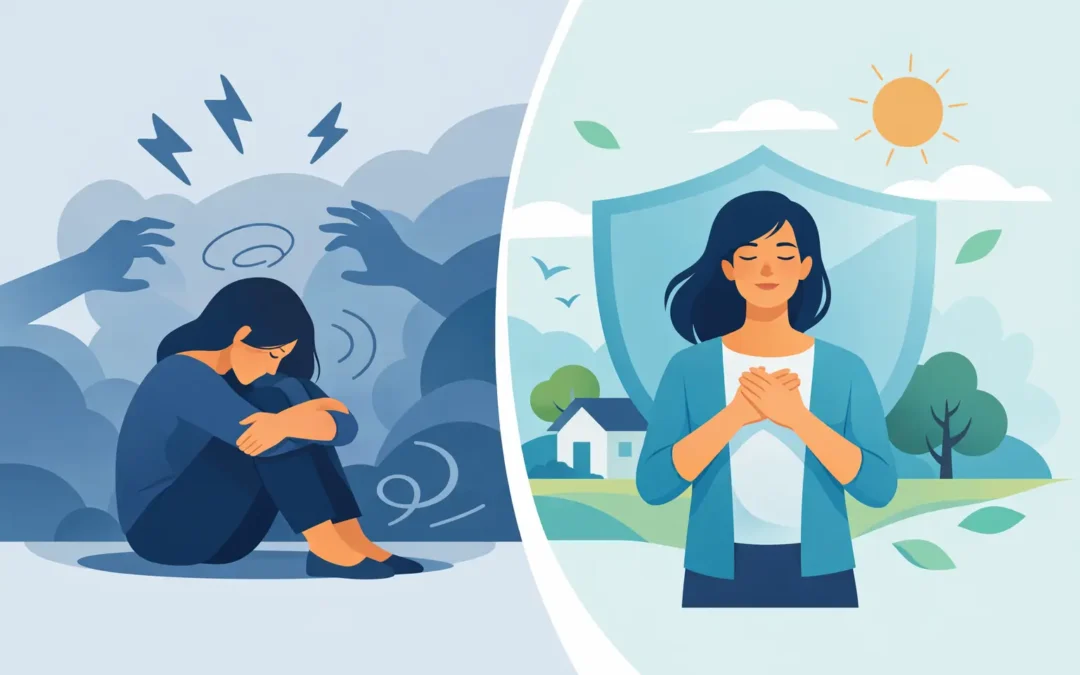
Panic rarely asks for permission. It can hit in the grocery store, in the middle of the night, during a meeting, or while driving down a familiar road. Your heart races, your chest tightens, your thoughts start shouting worst-case scenarios, and suddenly you are not just uncomfortable – you are afraid of what your own body is doing. If you have been searching for how to reduce panic anxiety, you are probably not looking for theory. You want relief that feels real.
The first thing to know is this: panic anxiety is intense, but it is treatable. Your body is reacting as if danger is present, even when you are not actually unsafe. That does not mean your experience is exaggerated or imagined. It means your nervous system has learned to go on high alert, and it needs support to settle, reset, and trust safety again.
Why panic feels so overpowering
Panic is not just a mental experience. It is physical, emotional, and often deeply conditioned. When your brain detects threat, it sends your body into survival mode. Adrenaline rises. Breathing changes. Muscles tense. Your stomach may flip. You may feel shaky, detached, dizzy, hot, cold, numb, or certain that something terrible is about to happen.
This is one reason generic advice can fall flat. If someone says, “Just calm down,” but your whole nervous system is firing, that advice can feel almost insulting. Panic does not respond well to force. It responds better to steady, repeated signals of safety.
For some people, panic is linked to chronic stress, unresolved trauma, grief, burnout, or a long season of feeling emotionally stretched too thin. For others, it seems to come out of nowhere. Either way, the goal is not to fight your body. The goal is to help your body stop misreading the moment.
How to reduce panic anxiety in the moment
When panic is already happening, the most useful response is usually simple, grounded, and physical. Trying to reason your way out of a panic surge can help sometimes, but often your body needs calming before your mind can truly listen.
Start by loosening the pressure to make it stop immediately. That sounds backward, but panic often grows when you become afraid of the panic itself. Instead of saying, “I cannot handle this,” try, “My body is activated, and this will pass.” You are not approving of the feeling. You are reducing the extra fear layered on top of it.
Then bring your attention to your breath, but do it gently. Deep breaths are not always the best first move because they can feel forced when you are already tight in the chest. A slower exhale is often more effective. Breathe in normally, then let the exhale become a little longer than the inhale. Think steady, not dramatic.
Next, orient to the room around you. Panic narrows attention and convinces you that danger is everywhere. Looking around and naming a few neutral things you see can help widen that tunnel. Notice the color of the wall, the shape of the chair, the feel of your feet in your shoes, the support of the seat under you. These small observations tell your nervous system, “I am here, now, and there is structure around me.”
Temperature can help too. Holding something cool, splashing cold water on your face, or stepping outside for fresh air can interrupt the panic loop. So can movement. If sitting still makes the sensations louder, try walking slowly, pressing your feet into the ground, or rolling your shoulders to release some of the stress response.
What helps after the panic wave passes
Many people focus only on surviving the attack, but what you do afterward matters too. Panic often leaves behind exhaustion, embarrassment, and dread about the next episode. That dread can become its own trigger.
After a panic episode, try not to judge yourself for it. Your nervous system had a surge. That is not a personal failure. If you can, write down what was happening before it started. Were you tired, overstimulated, emotionally flooded, hungry, rushing, or dealing with conflict? Patterns are not always obvious at first, but they often emerge over time.
It also helps to avoid building your life around prevention through avoidance. If panic happened in a store, on the highway, or in a social setting, your brain may quickly decide that the place itself is dangerous. That can shrink your world fast. Sometimes taking a smaller, supported step back into the situation is more healing than staying away indefinitely. The right pace matters, though. Pushing too hard can backfire. Gentle, supported re-entry tends to work better than forcing yourself through fear.
How to reduce panic anxiety long term
Lasting change usually comes from working with the whole system, not just the symptom. Panic is often the loudest alarm, but there may be deeper strain underneath it.
Sleep, caffeine, alcohol, blood sugar swings, and chronic overstimulation can all intensify panic for some people. That does not mean panic is caused by lifestyle alone, but your body is easier to regulate when it is not already running on fumes. If your panic is frequent, pay attention to what increases physical vulnerability. Sometimes small adjustments create more stability than people expect.
At the same time, long-term healing often requires more than self-help strategies. If panic is connected to trauma, grief, relationship pain, chronic anxiety, or a history of feeling unsafe, those roots deserve care. This is where therapy can become a turning point. A good therapist is not just teaching coping skills. They are helping you understand why your system is reacting the way it is and how to help it move out of survival mode.
Therapy and body-based support can make a real difference
Talk therapy can help you identify triggers, challenge catastrophic thinking, and reduce the fear cycle that keeps panic going. But for many people, especially those who feel panic strongly in the body, integrative approaches can be especially valuable.
Trauma-informed counseling, EMDR, and nervous-system-focused care can help your mind and body process experiences that may still be driving hyperarousal. Neurofeedback may also be helpful for people whose brains seem stuck in patterns of overactivation, reactivity, or poor regulation. Instead of asking you to simply think differently, these approaches support the brain and body in learning a calmer baseline.
That does not mean every approach is right for every person. It depends on your history, symptoms, and what feels safe to you. Some people respond well to cognitive tools. Others need more somatic or brain-based support before insight alone becomes useful. The best care is personalized, not one-size-fits-all.
When panic is starting to run your life
If you are changing routes, skipping events, avoiding sleep, fearing public places, or feeling trapped by the possibility of another episode, it may be time to get professional support. You do not need to wait until things become unbearable. In fact, earlier care often makes recovery smoother.
You also do not need to prove that your panic is “bad enough.” If it is disrupting your peace, your relationships, your work, or your ability to enjoy life, that is enough. Help is not only for people in crisis. It is for people who are tired of living braced for impact.
At Jump Start Counseling and Neurofeedback, we often meet people who look functional on the outside but feel anything but steady on the inside. They are holding jobs, caring for families, and getting through the day while quietly battling fear, tension, and emotional exhaustion. Panic can be part of that picture, but it does not have to stay in charge.
A steadier way forward
Learning how to reduce panic anxiety is not about becoming fearless overnight. It is about teaching your system, one experience at a time, that you are safer than your symptoms suggest. Some days that looks like slowing your breath and grounding in the room. Other days it means addressing the deeper pain, stress, or trauma that keeps your body on alert.
You are not broken because your nervous system is overwhelmed. You are human, and your body is asking for care. With the right support, panic can lose its grip, your confidence can return, and life can begin to feel bigger than fear again.
